Brent Below $80: US-Iran Ceasefire Reopens Strait, Supply Surge
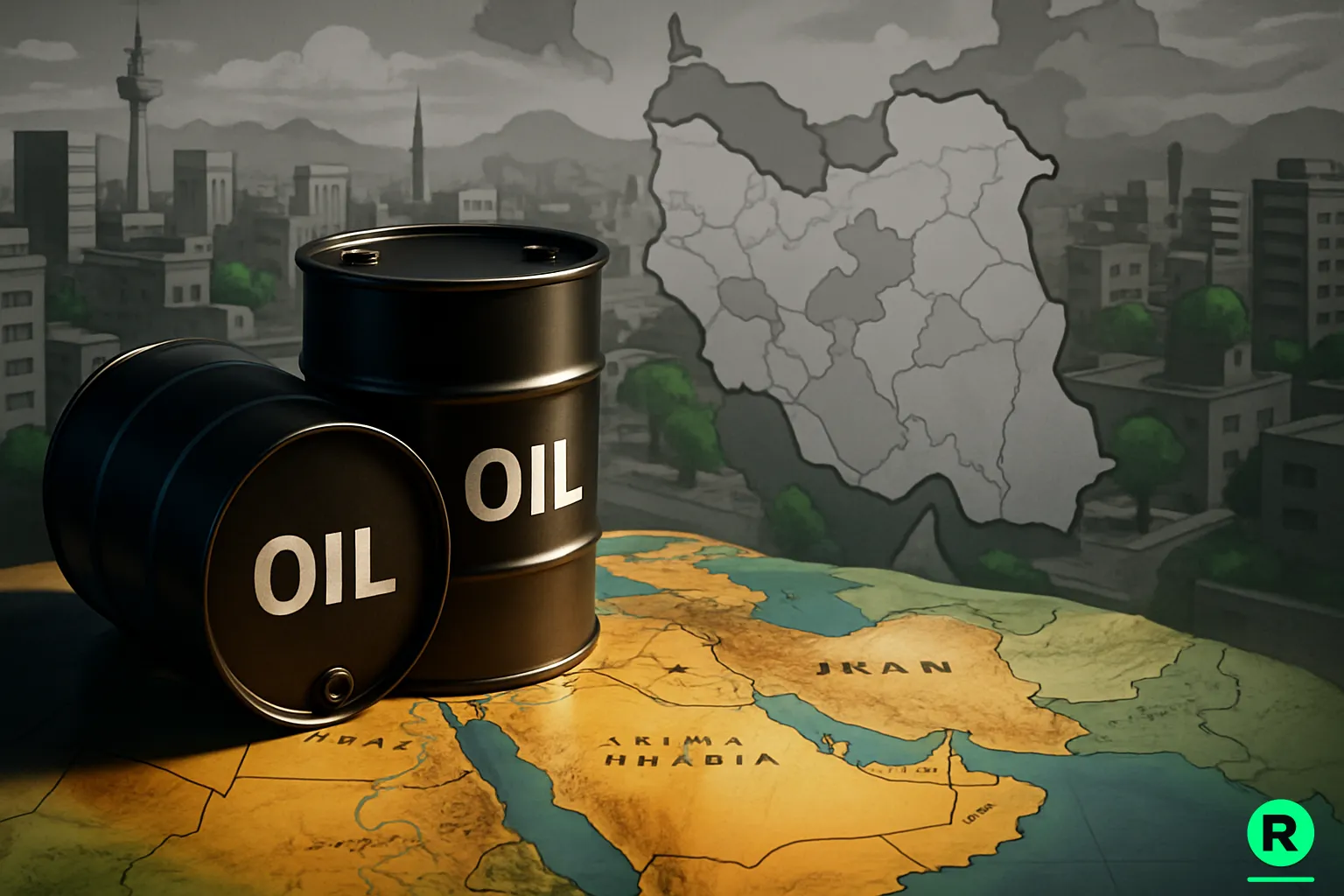
US-Iran ceasefire agreement signed June 20 triggers Strait of Hormuz reopening within weeks, pushing Brent crude below $80/bbl for first time since early March. Energy sector faces margin compression as geopolitical risk premium unwinds and supply normalisation accelerates.
RKey facts
- US-Iran ceasefire agreement signed June 20, 2026; Strait of Hormuz to reopen within weeks
- Brent crude fell below $80/bbl for first time since early March 2026
- Essar Group, Adnoc executing trade and supply deals consistent with normalised crude markets
- Geopolitical risk premium unwinding; energy sector relative performance at risk
What's happening
The US-Iran ceasefire accord, signed on June 20, has fundamentally altered the energy market backdrop. President Trump stated the deal includes 99.9% of his objectives, and the agreement unlocks one of the most critical geopolitical flashpoints: the Strait of Hormuz, through which roughly 20% of global seaborne crude flows daily. Market participants are now pricing in rapid normalisation of Iranian supply over the coming weeks, a shift that has sent Brent crude plummeting below $80/barrel for the first time since early March.
This supply shock relief has two immediate consequences. First, energy importers, from refiners to power utilities, face renewed margin pressure after months of elevated commodity costs. The ceasefire removes the geopolitical risk premium that had propped up crude and refined products. Second, the energy sector's relative outperformance is at risk as traders rotate away from defensive commodity exposure. XLE, the energy select sector ETFExchange-Traded Fund - a basket of securities trading like a single stock., has corrected on the news, while integrated oil majors like XOM, CVX, and COP face downward guidanceCompany-issued forecasts of future financial performance. revisions if spot prices persist near $75-80 territory.
Additional reports confirm the shift in supply dynamics. Essar Group's energy unit has structured a $500 million crude supply deal with International Resources Holding, signalling that traders are locking in lower prices. UAE's Adnoc, the Abu Dhabi state oil producer, has hired oil trading veteran Benoit Roulon to expand its trading operations, a move consistent with rising supply confidence and normalising crude markets. The unwind of carryIncome earned from holding a position over time. trades in energy futures has been orderly so far, but volatility could spike if drawdowns accelerate before Q3 consensus earnings revisions are published.
Critics of the ceasefire's durability note that Iranian compliance is untested and that geopolitical tensions could reignite quickly if enforcement mechanisms prove weak. Some energy analysts argue that crude markets have overshot lower, given that supply normalisation will be gradual; others believe $75-80 Brent is closer to fair value in a world without crisis premium. The debate hinges on how fast Iran's production truly ramps and whether OPEC+ responds with output discipline.
Related coverage
- Brent Below $80: US-Iran deal, XLE pressure, the trade decodedEnergy··0 mentions
- NG=F above zero for first time in 4 months: the reset decodedEnergy··0 mentions
- XLI -400bps vs SPY: ISM 49.2, manufacturing stall decodedEquities US··0 mentions
- China Consumer Spending Contracts in May: HSCE at 52-Week LowEquities APAC··0 mentions
More about $CL
- Brent Below $80: US-Iran deal, XLE pressure, the trade decoded·Energy
- XLI -400bps vs SPY: ISM 49.2, manufacturing stall decoded·Equities US
- NG=F above zero for first time in 4 months: the reset decoded·Energy
- Hang Seng down 15% YTD: China credit beats but copper at -9%, decoded·Equities APAC
- China Credit Rebounds Above Forecasts Yet HSCE Sits 15% Below Year-Ago Levels·Equities APAC
Live coverage of the Iran conflict, Persian Gulf oil supply disruption, OPEC reaction and the cross-asset trades pricing it.
- Yahoo FinanceChevron Takes 70% Interest in Greek Offshore Exploration Block3h ago
- ActionForexSunset Market Commentary
Markets Oil prices are correcting lower again today, with Brent crude testing the USD 80/bbl level for the first time since the Middle East conflict erupted in early March. Markets are still repositioning following the interim agreement reached between the US and Iran. We would caution against excessive optimism, as many issues still need to […] The post Sunset Market Commentary appeared first on ActionForex.
4h ago - Financial TimesOil sinks below $80 a barrel as traders bet Hormuz flows will return
Brent crude has tumbled to three-month low following agreement to extend US-Iran ceasefire
4h ago - ActionForexOil Crashes Below $80, But Markets Hold Fire Ahead of Fed Decision
The biggest move in global markets is still happening in oil. The most important move may come tomorrow. Brent crude plunged below USD 80 today, extending a dramatic collapse that began after the United States and Iran reached a provisional peace agreement over the weekend. The decline accelerated after President Donald Trump arrived at the […] The post Oil Crashes Below $80, But Markets Hold Fire Ahead of Fed Decision appeared first on ActionForex.
5h ago - CNBC Top NewsHere are Tuesday's biggest analyst calls: Apple, Tesla, Oracle, Palantir, CoreWeave, ExxonMobil, Flutter & more
Here are the biggest calls on Wall Street on Tuesday.
5h ago - ActionForexBitcoin Climbs Off the Lows, Facing a Wall of Resistance Ahead
Key Highlights Bitcoin tested $60,000 before it started a recovery wave. BTC/USD traded above a bearish trend line with resistance at $62,500 on the 4-hour chart. Ethereum recovered by over 10% and climbed above $1,750. WTI Crude Oil prices extended losses and traded below $82.00. Bitcoin Price Technical Analysis Bitcoin price extended losses and tested […] The post Bitcoin Climbs Off the Lows, Facing a Wall of Resistance Ahead appeared first on ActionForex.
15h ago - Financial TimesConocoPhillips set to sign deal with Syria to revive gas production
Agreement will be first by a US energy major with Damascus as it aims to rebuild activity after years of civil war
21h ago - ForexLiveinvestingLive Americas FX news wrap 15 Jun: Dollar mixed as markets eye key rate decisions
At the close: Not the best finish to the day Shares of SpaceX rise 16% as retail piles in Crude oil sets the topside risk with the run lower today Netanyahu: We will remain in Lebanon as long as we need to Trump/US Senior Official and Trump: Strait of Hormuz will be fully open on Friday The copper market is tighter than you think -- Scotia Israeli drone strike in southern Lebanon kills driver NAHB US June home builder sentiment 35 vs 37 expected Four markets that are poised to celebrate the reopening of the Strait of Hormuz US May industiral production +0.1% vs +0.2% expected US June Empire Fed +5.7 vs +14.0 expected Canada April manufacturing sales +4.2% vs +4.5% expected Canada May housing starts 261.4K vs 278.4K prior The USD is lower to start the new week as Iran deal dominates and leads the markets. investingLive European session wrap: Oil prices sink as markets cheer US-Iran agreement The U.S. dollar started the North American session on the defensive but ended the day mixed, falling against the EUR, GBP, CHF, and AUD while gaining versus the CAD, JPY, and NZD. Improving sentiment in the Middle East weighed on the greenback as investors embraced a more risk-friendly tone following reports that the United States and Iran have reached a framework peace agreement that is expected to be formally signed on Friday. According to President Trump, the agreement includes the reopening of the Strait of Hormuz, the lifting of the U.S. naval blockade of Iran, a commitment that Iran will not possess a nuclear weapon, and strict enforcement mechanisms. Additional details are expected later this week. With geopolitical tensions easing, market attention is shifting toward a busy week for central banks. The Federal Reserve is expected to leave rates unchanged when it announces its decision on Wednesday, but investors will be focused on Fed Chair Kevin Warsh's first meeting at the helm and any clues regarding the future policy bias. Before the Fed decision, the Bank of Japan is
21h ago