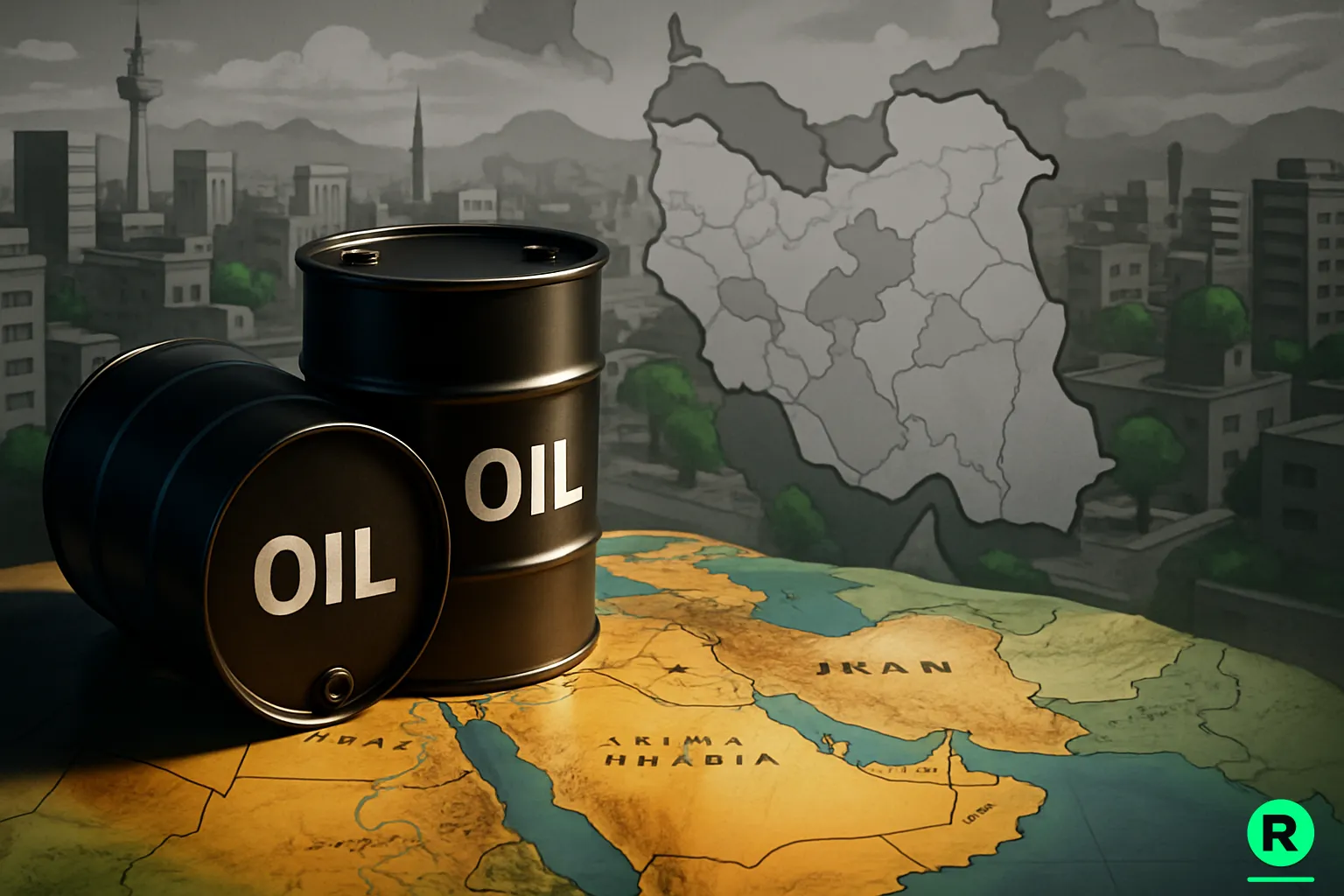
Iran Oil Shock: Tracking the Middle East Supply Risk Trade
Live coverage of the Iran conflict, Persian Gulf oil supply disruption, OPEC reaction and the cross-asset trades pricing it.
The Iran oil shock is the most consequential geopolitical supply risk of 2026. Persian Gulf production, tanker routing through the Strait of Hormuz, and OPEC's response have moved Brent crude, energy equities (XLE), the dollar (DXY), and inflation expectations all at once. The cross-asset impact is what makes this a single tradable theme rather than a one-ticker story.
This hub tracks every RockstarMarkets story tied to the conflict — from Saudi production at 1990 lows to Iran's Kharg Island halt to the inflation-bond repricing it triggers in US Treasuries. We also flag the key concepts behind the trade (supply shock, demand destruction, term structure of oil futures) so a reader new to the theme can build context fast.
If you are trading energy ETFs (USO, BNO, XLE), watching defensive sector rotation, or tracking the second-order inflation impact on the Fed's rate-cut path, this is the page to bookmark.
Latest coverage
- Copper -8% in June: China spending dip, HG=F decoded
Copper fell 8% this month, dropping 1% on June 17 alone after Warsh's hawkish press conference, while China posted its first post-pandemic consumer-spending contraction in May 2026. Covers real-yield pressure, DX-Y.NYB, EEM sensitivity, and Oyu Tolgoi supply context.
· $HG· $EEM· $HSI· $HSCE - ISM 49.2, sixth month: XLI lags SPY 400bps, decoded
US manufacturing ISM printed 49.2 in May 2026, a sixth straight contraction month, with XLI underperforming SPY by 400 basis points year-to-date on Iran-shock logistics costs. Ceasefire catalyst, CAT, BA, HON order trends, and H2 capex outlook tracked live.
· $XLI· $BA· $CAT· $DE - WTI below $80: Hormuz reopens June 21, XLE decoded
US-Iran ceasefire signed June 20, 2026 pushed WTI crude below $80 and gasoline under $4 for the first time since March. Goldman sees Hormuz at 70% capacity, pressuring XOM, CVX, COP margins vs. SPY tracked live.
· $CL· $BZ· $XLE· $XOM - Fed 4.50%, Warsh Hawks Sept Hike: USDJPY 158, decoded
Warsh's first FOMC meeting held rates at 4.50% while traders now price 100% odds of a September 2026 hike. Live chart, dot-plot breakdown, USDJPY 158 reaction, BoJ 90% hike odds, TLT levels, key catalysts tracked.
· $DX-Y.NYB· $USDJPY· $TLT· $IEF - Fed 4.50%, Warsh Debut: 100% Sept Hike, USDJPY 158 decoded
Warsh's first FOMC meeting held rates at 4.50% while resetting trader odds to 100% for a September 2026 hike. Live dot plot, TLT levels, USD/JPY 158 intervention risk, BTC retreat, and carry-unwind catalysts tracked.
· $DX-Y.NYB· $USDJPY· $TLT· $IEF - HG Copper -8% on China May Contraction: EEM stress read
China posted its first post-pandemic year-over-year consumer spending contraction in May 2026, sending copper futures down 8% on demand cliff fears. BABA, BIDU, EEM rotation, and Rio Tinto flow data tracked live.
· $HG· $EEM· $HSI· $HSCE - ISM 49.2: XLI lags SPY 400 bps, BA & CAT cut, decoded
US manufacturing ISM fell to 49.2 in May 2026, signaling contraction as Iran supply-chain shocks and softening orders hit XLI hard. BA and CAT face fresh downgrades, with Goldman flagging a potential peak in the historic capex boom.
· $XLI· $BA· $CAT· $DE - Brent below $80: Iran ceasefire, XLE margin risk, the desk read
Brent crude broke below $80/barrel on June 20 as the US-Iran ceasefire erased the war premium and Hormuz reopening neared. XOM, CVX margin pressure, Iraq export boost, TotalEnergies $1B trade reversal, EM relief tracked live.
· $XLE· $XOM· $CVX· $BZ - Fed holds 4.50%: Citadel 40% Sep hike odds, TLT -12bps tracked
Chair Warsh held at 4.50% on June 15, but Citadel Securities now prices a 40% chance of a September hike. Page covers TLT yield move, eurodollar curve vol, ECB tightening bias, and terminal-rate debate.
· $TLT· $IEF· $DX-Y.NYB· $SPY - HYG at 85c: private-credit defaults 3-yr high on $300B index
Kroll's $300B private-credit index hit a 3-year default-rate peak on June 16, even as US firms issued $40B+ in single-day debt post-ceasefire. Spread analysis, HYG levels, JPM and GS loan-loss risk, and cycle comparisons decoded.
· $HYG· $LQD· $GSPC· $JPM - Fed holds 4.50%: TLT -12 bps, September hike at 40%, decoded
Warsh's first Fed meeting held rates at 4.50% on June 15, sending TLT down 12 bps as Citadel flagged 40% September hike odds. Covers Goldman Dec cut forecast, CPI June 25 catalyst, and USD index reaction.
· $TLT· $IEF· $DX-Y.NYB· $GSPC - Fed holds 4.50%: Warsh era, TLT -12 bps, what pros watch
The Fed held at 4.50% on June 15 in Warsh's first meeting, with Citadel Securities lifting September hike odds to 35%. Statement breakdown, dot-plot read, TLT levels, ECB cross-current tracked live.
· $TLT· $IEF· $DX-Y.NYB· $SPY - HYG Near 85: $40B debt surge, buyback cycle risk, the desk read
US corporates priced over $40 billion in new debt on June 15, the largest single-day volume in months, compressing HYG spreads toward historical tights near 85. JPM & GS underwriting pull-through, buyback mechanics, and spread blowout risk decoded.
· $HYG· $LQD· $SPY· $GSPC - HSCE 52-week low: China spending contracts, EEM -300 bps tracked
China consumer spending contracted in May 2026, its first decline since the pandemic recovery, driving HSCE to a 52-week low and widening EEM's lag vs VEA to 300+ bps. Covers HG=F copper pressure, youth unemployment above 20%, BABA and BIDU valuation risk.
· $HSCE· $EEM· $HG· $XLB - NG=F above zero for first time in 4 months: the reset decoded
West Texas natural gas crossed above zero on June 15 for the first time since early February, as Iran ceasefire dynamics slow associated gas growth in oil-weighted basins. LNG export utilization, Haynesville vs Permian output, OXY and COP capex discipline tracked live.
· $NG· $CL· $XLE· $CVX - HYG Spreads -80bp on $40B Issuance: buyback cycle, the desk read
US corporates issued over $40B in debt on June 15 as HYG spreads compressed 80bp, opening a cheap-leverage window for large-cap buyback acceleration. Covers LQD tightening, mega-cap concentration feedback, Fed December 2026 carry trade, and forced-seller reversal risk.
· $SPY· $GSPC· $HYG· $LQD - Fed Holds at 4.50%, GS Cuts First-Cut to Dec 2026: TLT levels
The Fed held rates at 4.50% on June 15 as Chair Warsh flagged inflation running at its fastest pace in three years, prompting Goldman to push its first-cut call to December 2026. Covers TLT and IEF duration risk, DXY higher-for-longer bid, bond market 50/50 pricing, and recession pivot triggers.
· $GSPC· $TLT· $IEF· $DX-Y.NYB - Hang Seng down 15% YTD: China credit beats but copper at -9%, decoded
China credit growth beat June 2026 forecasts after an April contraction, yet the Hang Seng China Enterprises index remains 15% lower YTD and copper holds 8 to 10% below prior-year levels on property demand skepticism. Live chart, SOE vs. private capex split, AUD underperformance, PBoC rate pressure on HK dividend payer
· $HSCE· $SSEC· $HG· $CL - Bitcoin Recovers from $59,000 to Above $64,000 as Spot ETF Inflows Hit One-Month High of $85.8M
Standard Chartered identified the SpaceX IPO success and Iran ceasefire signals as the dual catalysts confirming the $59,000 cycle low, with $85.8M in Friday ETF inflows marking the strongest institutional re-engagement in roughly a month. Ethereum spot ETFs continued to see outflows through the same period, leaving BT
· $BTC· $ETH· $SOL· $XRP - DXY at February 2025 Highs as USDJPY Holds Above 159 on Extended Fed Hold
The Fed's rate-hold extension to mid-2027 widened interest-rate differentials sharply in the dollar's favour, pushing EUR/USD back toward 1.1499 and leaving GBP/USD unable to clear 1.33 resistance. Dollar strength at these levels creates FX translation headwinds for US multinationals and tightens financial conditions f
· $DX-Y.NYB· $EURUSD· $USDJPY· $GBPUSD - Bitcoin Reclaims $63,000 as Binance Logs $5.6B in SPCXUSDT Volume Within 24 Hours
SpaceX IPO euphoria and US-Iran ceasefire hopes reversed the early-June $59,000 lows, while tokenized share settlement delays exposed on-chain infrastructure limits, even as Solana gained a $250M CLO allocation lifting ETH-USD and SOL-USD alongside the risk-on move.
· $BTC· $ETH· $SOL· $COIN - China Credit Rebounds Above Forecasts Yet HSCE Sits 15% Below Year-Ago Levels
Copper and the offshore yuan have shown only muted reactions, reflecting limited trader conviction that May's loan and social financing recovery will translate into durable demand acceleration. AUD/USD and broader EM equity indices are similarly failing to follow the credit signal, keeping the commodity-growth reflatio
· $HSCE· $SSEC· $HG· $CL - WTI Extends Three-Day Rally as Hormuz Closure Probability Reaches 30 Percent
Hezbollah's rejection of a US-Iran truce on June 4 eliminated near-term diplomatic off-ramps, keeping a meaningful supply risk premium in CL=F while the US SPR sits at 3-year lows. A sustained crude bid above key levels lifts XLE outperformance versus SPY but introduces an oil-driven inflation headwind for cyclicals.
· $CL· $BZ· $XLE· $XOM - WTI Extends Three-Day Rally as Hormuz Closure Probability Reaches 20 to 30 Percent
Hezbollah's rejection of a ceasefire on June 4 has revived a supply-shock risk premium in crude, lifting XLE and boosting XOM and CVX cash flow expectations, while a rapid de-escalation remains the key tail risk that could swiftly reverse energy sector outperformance versus SPY.
· $CL· $BZ· $XLE· $XOM
Frequently asked
How does the Iran conflict affect oil prices?
Iran produces roughly 3 million barrels per day, much of it shipped through the Strait of Hormuz. Disruption of Iranian exports plus the risk premium on Persian Gulf shipping has pushed Brent crude above $95 and widened the contango in oil futures. A full Hormuz closure would likely double the move.
Which ETFs benefit from rising oil during a geopolitical shock?
USO and BNO track WTI and Brent directly; XLE captures US energy equities (XOM, CVX, COP); OIH covers oilfield services. Energy is the only S&P sector that consistently outperforms during oil shocks.
How does an oil shock affect Fed rate-cut expectations?
Higher oil feeds into headline CPI and PPI, which the Fed watches even when policy targets core inflation. Persistent crude above $90 typically pushes Fed funds futures to price out at least one rate cut and steepens the 2s10s curve.
What is the historical playbook for oil supply shocks?
1973, 1979, 1990 and 2022 all saw oil rallies above 50% over 6 to 12 months coincide with energy outperforming the S&P by 40+ percentage points, the dollar strengthening, and growth equities (especially semis and consumer discretionary) underperforming.