What it means
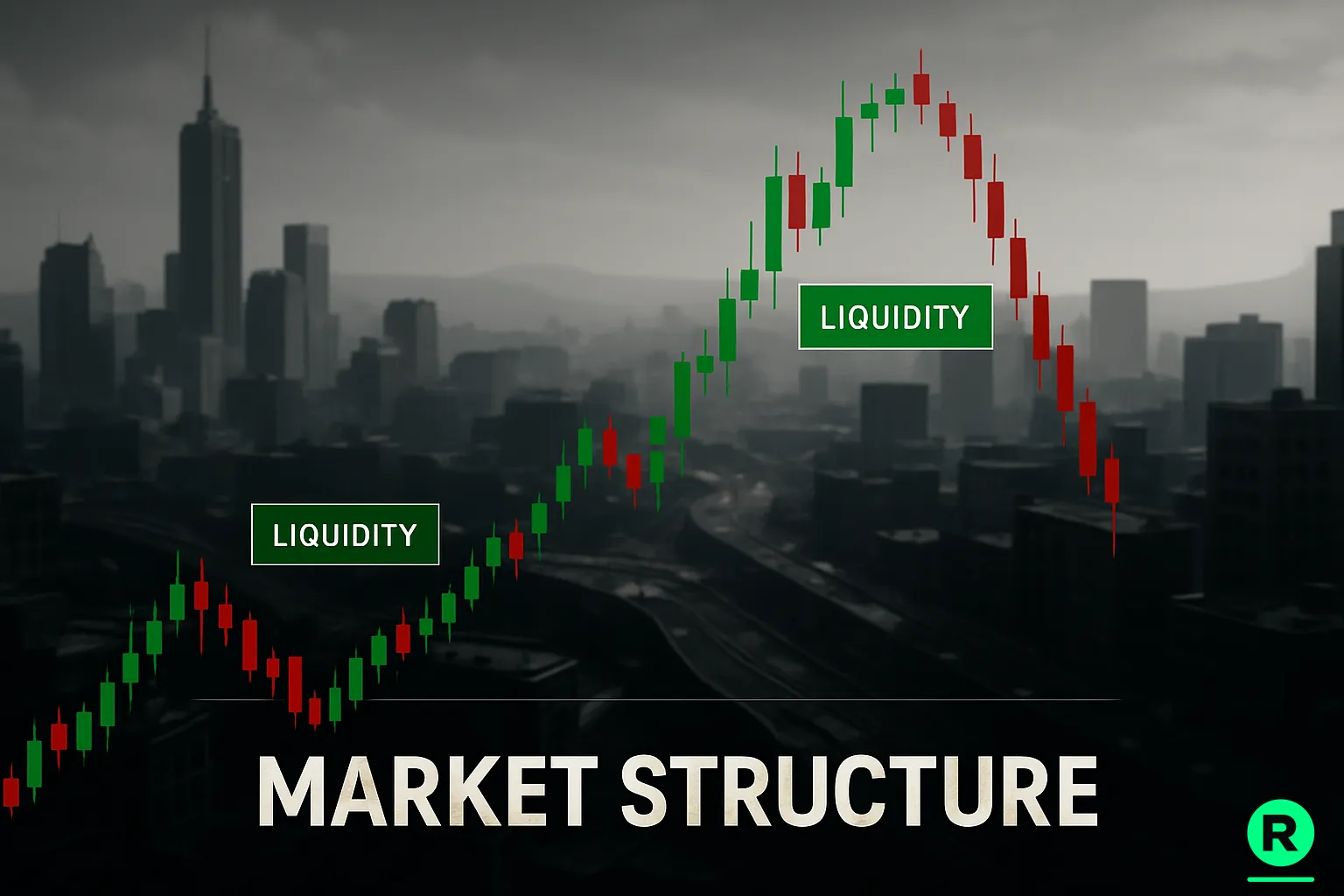
Equal highs (EQH) are two or more swing highs at essentially the same price level — stops cluster just above. Equal lows (EQL) are the inverse. SMC theory treats these as primary 'liquidity pools' that institutional flow targets. EQH/EQL often get 'swept' (wicked beyond) before significant reversal moves. Identifying them in advance lets you predict where liquidity sweeps will occur.
Why it matters
EQH/EQL are mechanically obvious: any swing trader places stops just above an EQH or just below an EQL because those represent breakouts. The concentration of stops at these levels makes them attractive targets for institutional flow seeking liquidity. The pattern is observable and exploitable both ways: trade the sweep (fade EQH/EQL on touch + reversal) or anticipate stop-out (avoid placing stops at obvious EQH/EQL).
How to use it
Mark EQH and EQL on your trading timeframe — typically 4H and daily. When price approaches an EQH/EQL after a directional move, prepare for one of two scenarios: (1) clean breakout = trend continuation, (2) sweep + reversal = liquidity grab. Use confluence (order block, FVG nearby) to determine which scenario to lean toward. Don't place stops AT the obvious EQH/EQL level; place them slightly beyond.
EUR/USD Aug-Sept 2024: three swing highs at 1.1200 (Aug 26, Aug 29, Sept 6) — clear EQH. Sept 25 wick to 1.1214 (sweeping the EQH stops) then sharp reversal. Close that session 1.1135. Decline to 1.0900 over next 3 weeks.
How 'equal' is equal — tolerance for EQH/EQL
Strict definition: the two highs (or lows) within 0.1-0.3% of each other depending on the asset. EUR/USD EQH within 5-10 pips. SPX EQH within 5-10 points. BTC EQH within 0.5%. Tighter tolerance = more reliable signal but rarer. Loose tolerance = more frequent but more noise. Most SMC traders use a visual judgment of 'obviously equal' — if it looks equal on a clean chart, it counts.
Triple and quadruple EQH/EQL
Three or more equal highs (TEQH) or lows (TEQL) accumulate progressively more stops with each touch. By the third or fourth touch, the stop concentration is significant enough that the sweep becomes highly probable — often within 5-10 sessions of the third equal touch. The pattern 'fails' (breaks cleanly without sweep) about 25% of the time; the other 75% see a sweep first.
Frequently asked
How is EQH different from a double top?
Mechanically identical at the chart level. Different framings: double top is a chart-pattern reversal signal; EQH is an SMC liquidity-pool concept. Same structure, different interpretation — and both can be useful simultaneously.
Should I always wait for the sweep before trading EQH?
Higher conviction yes — wait for the sweep + reversal. Mechanical entries at EQH without the sweep have ~50/50 outcomes (clean break vs reversal). The sweep + immediate reversal is the high-reliability variant.
What if the EQH is at a major round number?
Higher conviction — round-number + EQH = double liquidity concentration. EUR/USD at 1.1000 with EQH from prior sessions is a much higher-probability sweep zone than EQH at 1.1037. Round numbers amplify the stop-cluster effect.
Do EQH/EQL work on intraday timeframes?
Yes — common pattern is EQH/EQL on 1H or 4H timeframes that get swept on lower timeframes. The fractal nature of liquidity pools means the framework applies across scales. Lower-timeframe EQH/EQL have shorter shelf-life and more frequent occurrence.
Want a worked example or a deeper dive? Ask Rocky how this concept applies to your specific watchlist or trade idea.
Ask Rocky