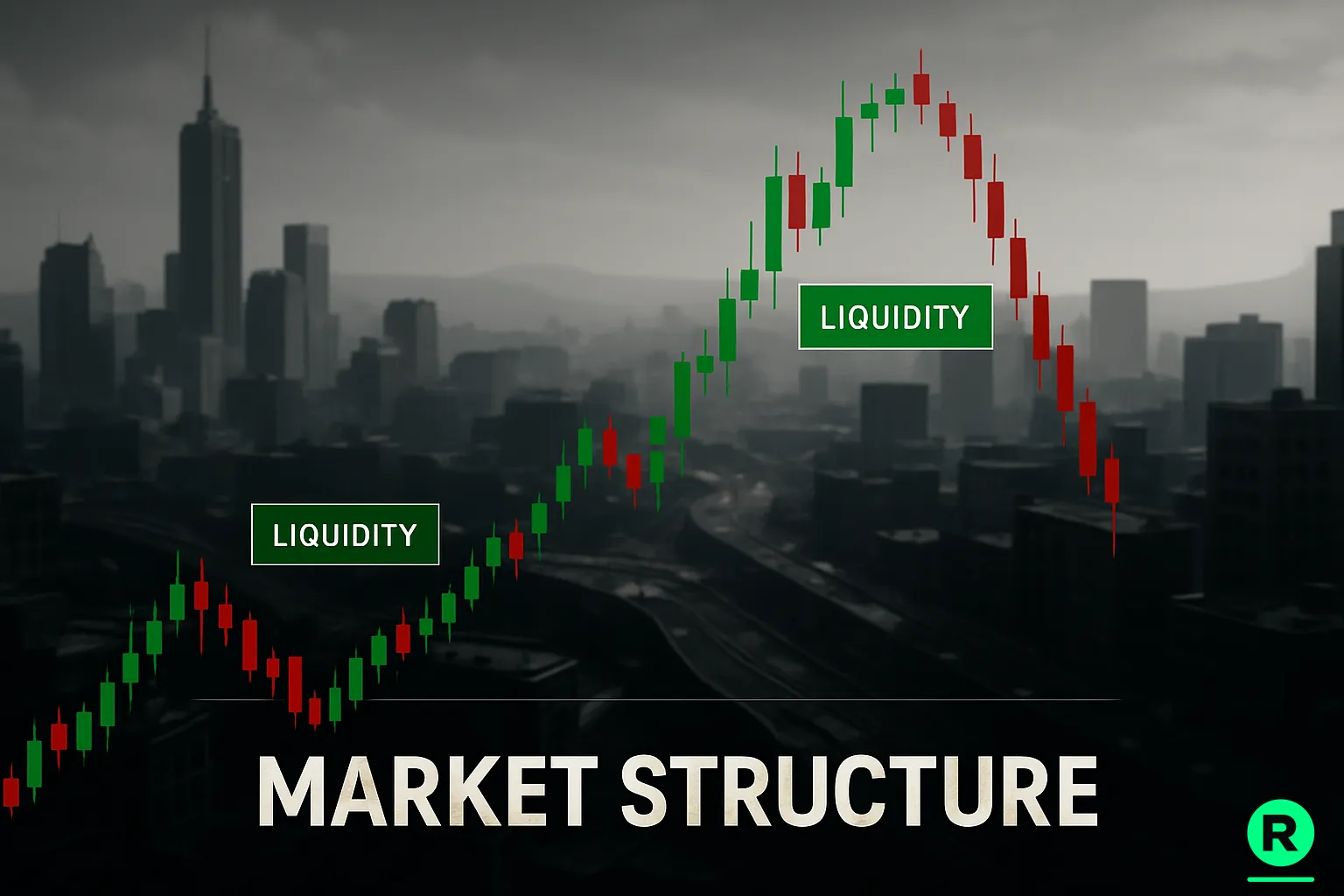
What it means
A liquidity sweep is a price move that wicks BEYOND a known liquidity pool — typically a swing high/low where stops cluster — without closing beyond it, then reverses sharply. SMC theory treats this as institutional flow deliberately triggering retail stops to source liquidity for their own positions. The sweep + immediate reversal is one of the highest-reliability SMC entry patterns.
Why it matters
Liquidity sweeps capture an observable market dynamic: stops cluster at obvious levels (round numbers, swing highs/lows), and large players need liquidity to enter positions. A move that pokes beyond a stop cluster then reverses suggests the move was specifically designed to access that liquidity. Whether you accept the 'manipulation' framing or just see it as 'stop-hunt mechanics,' the price action is real and tradeable.
How to use it
Identify liquidity pools: equal highs/lows, round numbers (1.0800 on EUR/USD), prior session extremes, daily/weekly highs/lows. When price wicks BEYOND a pool but closes back inside, prepare for reversal entry. Entry on close back inside the pool with stop just beyond the sweep extreme. Target = nearest opposing liquidity pool.
EUR/USD March 2024: equal highs at 1.0980 over 5 sessions. March 21 wick to 1.0995 (taking out the 1.0980 stops) then immediate reversal, daily close at 1.0860. Decline continued to 1.0700 over next 2 weeks.
What makes a 'valid' liquidity sweep
Four criteria distinguish actionable sweeps from random volatility. (1) Clear liquidity pool: equal highs/lows, round number, or prior major swing — somewhere stops obviously cluster. (2) Wick beyond, not close beyond: the candle wicks past the level but closes back inside. A close beyond is a breakout, not a sweep. (3) Reversal speed: the reversal should be sharp and immediate (within 1-3 candles). Slow drift back is weak signal. (4) Volume on the sweep: elevated volume confirms the flow event vs random noise.
Sweep + reversal at higher-timeframe order blocks
The highest-conviction SMC entry combines two concepts: liquidity sweep at a level that ALSO coincides with a higher-timeframe order block or FVG. The combined signal: institutional flow grabbed stops to fill orders at a pre-identified institutional zone. Setup: 4H order block + liquidity sweep on 15m timeframe entering the order block + immediate rejection. Stop just beyond the sweep extreme. High-reliability entry but requires strict definition.
Frequently asked
How is liquidity sweep different from stop-hunt?
Same concept, different frameworks. 'Stop-hunt' is the older retail-trading term for the same mechanic. 'Liquidity sweep' is the SMC/ICT term that adds the institutional-flow narrative. Mechanically identical: brief wick beyond a stop cluster followed by reversal.
Can liquidity be 'swept' on the daily timeframe?
Yes — daily wicks beyond multi-week swing highs/lows that close back inside are major liquidity sweep events. These often mark significant turning points on the weekly chart. Weekly sweeps are even rarer and can mark multi-month turns.
What if the sweep doesn't reverse immediately?
Not a sweep — it's a breakout. Sweeps require immediate (1-3 candle) reversal. Slow drift back inside is weaker signal and often precedes a delayed continuation in the original direction.
Can I trade liquidity sweeps without other confluence?
Mechanically yes, but reliability drops materially without additional context. Sweeps in mid-range fail ~50% of the time. Sweeps at structural levels (order blocks, FVGs, major swings) with confirmation = ~65-75% reliability. Use confluence; don't trade isolated sweeps.
Want a worked example or a deeper dive? Ask Rocky how this concept applies to your specific watchlist or trade idea.
Ask Rocky