USD/JPY at 160.45: Fed Hawkish Pivot Widens Rate Gap to 340bp, BoJ Silent
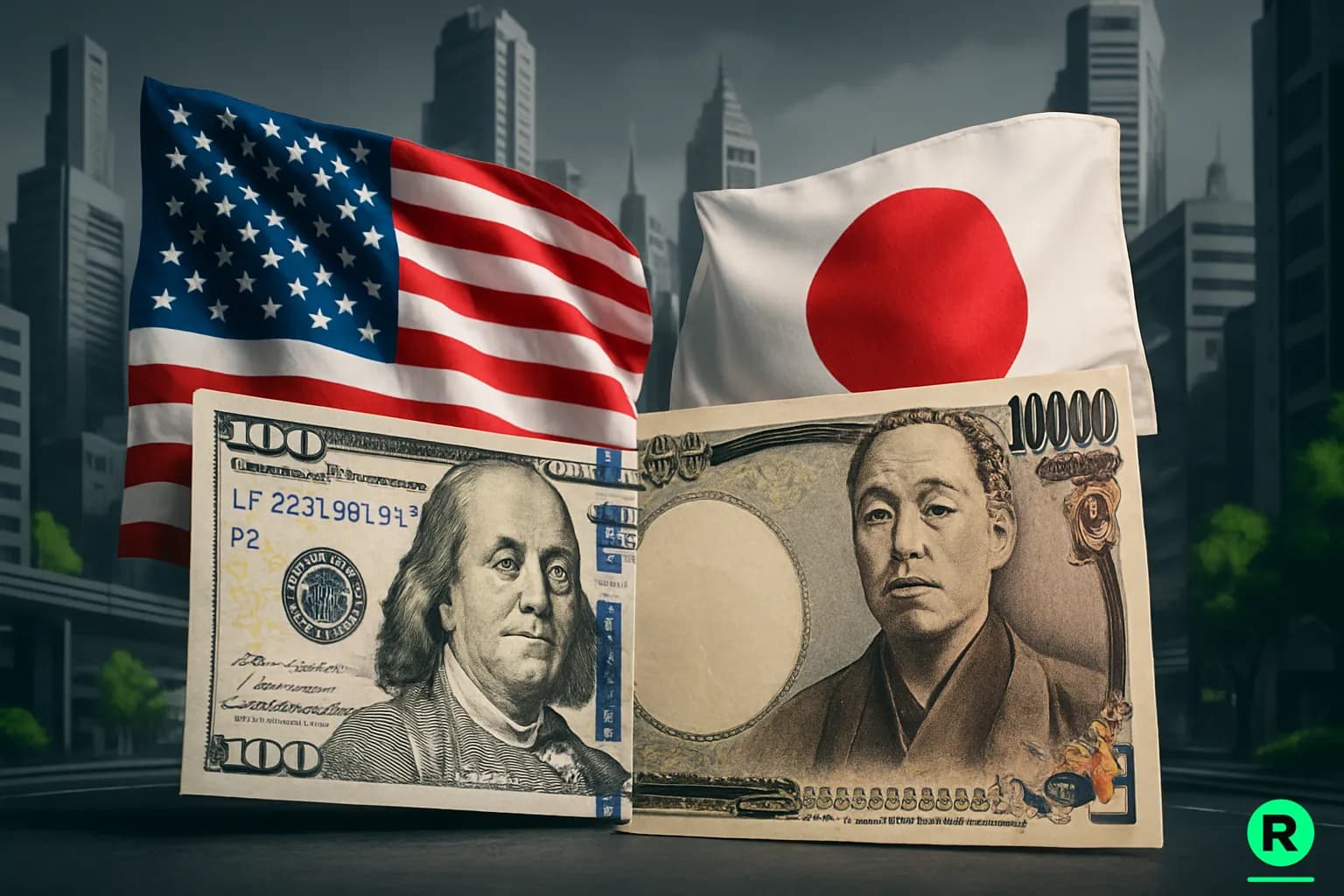
USD/JPY holding 160.45 after Fed Chair Warsh signaled two rate hikes by year-end, widening the Fed-BoJ spread to 340 basis points and erasing yen intervention gains since April. Live chart, key levels, carry-trade stress, and June 25 CPI ca
TL;DR
- Fed hawkish (2 hikes by year-end) opens 340bp rate gap vs BoJ gradualism
- CarryIncome earned from holding a position over time. unwind stress: DXJ +1.35%, FXY +0.07%, intervention gains April erased
- USD/JPY 160.45 tests 160.50 resistance; support at 159.00 and 158.45
- June 25 US CPI is next catalyst; BoJ silent until clarity on inflationThe rate at which prices rise across an economy. trend
Key levels
- resistance160.50Multi-month resistance zone; recent intraday reversal point tracked live
- support159.00ActionForex target on break of 159.54; 38.2% retrace of 155.01-160.58 near 158.45
- pivot160.00BoJ MOF historical tightening threshold; carry liquidation accelerates above
Cross-asset confirmation
- $DXJInverse dollar exposure to Japan; reflects broad yen weakness and carryIncome earned from holding a position over time. unwind+1.35%
- $EWJNikkei 225 exporter play benefiting from weak yen but fragile on carryIncome earned from holding a position over time. stress+1.33%
- $DX-Y.NYBDollar index at 3-month highs; Warsh hawkish pivot driving broad greenback strength+0.91%
- $TLT10-year yield repricing higher on Fed dot plot hikes; carryIncome earned from holding a position over time. rates tightening-12bps
Full brief
USD/JPY closed 2026-06-17 at 160.45 (down 0.02% intraday), within a tight range of 160.13 to 160.49, after the Federal Reserve's June 18 decision and Chair Kevin Warsh's debut press conference cemented expectations for two rate hikes by year-end. The pair had traded as high as 158 in the immediate aftermath of the hawkish repricing, the weakest yen level since July 2024, before stabilizing near current levels. The five-day move reflects acute volatility as traders recalibrated the Fed-BOJ divergence from subdued expectations to aggressive tightening from the US side.
The catalyst was unmistakable: Warsh held the benchmark rate at 4.50% on June 18 while the dot plot revealed multiple officials expect two hikes before December 2026, a material hawkish shift from prior dovish messaging. The Fed's updated economic projections showed the committee sees inflationThe rate at which prices rise across an economy. running "well ahead" of its 2% target, with the dot plot flagging an end-of-year inflation estimate of 3.8%. Meanwhile, the Bank of Japan on June 16 raised its policy rate to 1.0% and confirmed a gradual taper of government bond purchases, signaling gradualism rather than aggressive tightening. This policy divergence has opened a 340 basis point gap between US and Japanese rates, the widest spread in recent quarters and a textbook driver of carryIncome earned from holding a position over time.-trade funding stress.
Cross-asset confirmations are stark. FXY (Nikkei 225 inverse yen proxy) edged up 0.07% to 57.23, while DXJ (inverse dollar exposure to Japan) jumped 1.35% to 176.73, signaling broad-based yen weakness across equity indices. EWJ, the iShares MSCI Japan ETFExchange-Traded Fund - a basket of securities trading like a single stock., posted a 1.33% gain to 95.37, reflecting repricing of Japanese exporters into a weaker currency. The DXY (dollar index) surged 0.91% to 28.185, its best session in weeks, as the Fed's hawkish stance lifted the entire greenback complex. These moves confirm that carryIncome earned from holding a position over time.-trade unwind risk is acute: higher US rates make borrowing in yen more expensive while funding equities and crypto becomes unprofitable, triggering a liquidation cascadeSelf-reinforcing chain of forced liquidations: each liquidation moves price further, triggering more liquidations. The structural cause of crypto's flash crashes..
Technical levels show USD/JPY testing resistance near 160.50. ActionForex analysis flagged 160.50 as a multi-month resistance zone where the pair reversed down intraday. Support sits at 159.00, with the 38.2% retracement of the 155.01 to 160.58 move at 158.45. Break of 159.54 intraday would extend the fall toward 158.45; conversely, a decisive break above 160.58 would resume the uptrend. No clean technical breakout has materialized yet, leaving the pair range-bound between intervention risk (BoJ's historical 155 floor and MOF's 160-plus tightening point) and carryIncome earned from holding a position over time.-liquidation pressure.
Positioning risk is elevated. JPMorgan and Fidelity have already flagged carryIncome earned from holding a position over time.-trade fragility, while Citadel Securities is pricing 40% odds of a September hike, a dramatic repricing from late-May cut expectations. BoJ intervention gains since April are erasing, per Nikkei Asia coverage. The June 25 CPI print in the US will be the next major catalyst; if inflationThe rate at which prices rise across an economy. surprises higher, the market will reprice September hike odds even steeper, potentially pushing USD/JPY toward 161-162. Conversely, a cooler reading could give the BoJ a window to hold and defend the yen. Official intervention is not yet live but increasingly probable if USD/JPY sustains above 160.50 for more than a session or two.
Central bank watch · BOJ / FED
Fed Chair Warsh's debut on June 18 flagged two 2026 hikes, widening the policy gap vs BoJ's 1.0% June 16 hike plus gradual taper. BoJ gradualism (cruising pace ¥2T monthly from April 2027) signals patience, exposing Japan to carryIncome earned from holding a position over time.-unwind and intervention risk if USD/JPY sustains above 160.
Catalysts to watch
- highUS CPI (June reading)June 25, 2026
- highPotential BoJ emergency statement on yen weaknessOngoing
- mediumECB policymaker Simkus comments (at least one more hike ahead)June 17-18
Tracking Japan's currency intervention, BoJ policy shifts, US Treasury sales and the most crowded macro trade of 2026.
USD/JPY is driven by the US-Japan 10Y yield spread and the global carry trade. Above 155 historically draws Ministry of Finance verbal intervention; above 160 has triggered direct yen-buying twice in the modern era (2022 and 2024). The pair is a global risk barometer: USD/JPY higher = risk-on; sudden drops = global de-risking.