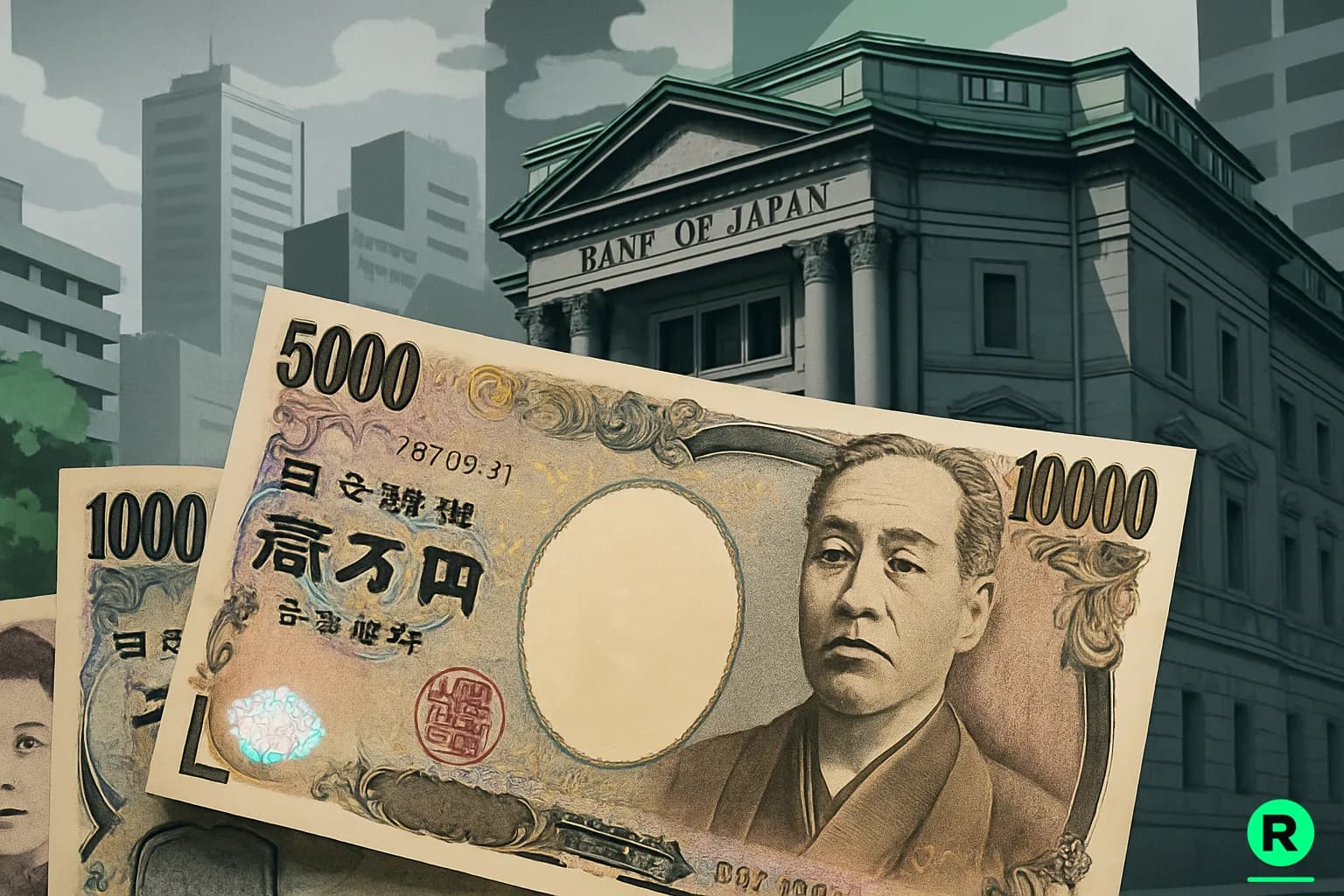
Yen Intervention: BoJ, USDJPY and the Crowded Macro Trade
Tracking Japan's currency intervention, BoJ policy shifts, US Treasury sales and the most crowded macro trade of 2026.
USDJPY has become the cleanest single proxy for the global rate differential trade. When the pair rips above 155, speculation about Bank of Japan or Ministry of Finance intervention rises in real time. The mechanics involve the MoF selling US Treasuries to fund yen buying — a chain that ripples into US bond yields, dollar strength, and Asian equities all at once.
This hub aggregates every story we've published on yen intervention attempts, BoJ rate guidance, and the carry trade unwind risk that comes with it. Whether you are positioned in FXY, hedging international equity exposure, or watching for the gilts-style margin event that intervention sometimes triggers, the live coverage below is what we are tracking.
Latest coverage
- Copper -8% in June: China spending dip, HG=F decoded
Copper fell 8% this month, dropping 1% on June 17 alone after Warsh's hawkish press conference, while China posted its first post-pandemic consumer-spending contraction in May 2026. Covers real-yield pressure, DX-Y.NYB, EEM sensitivity, and Oyu Tolgoi supply context.
· $HG· $EEM· $HSI· $HSCE - Fed 4.50%, Warsh Hawks Sept Hike: USDJPY 158, decoded
Warsh's first FOMC meeting held rates at 4.50% while traders now price 100% odds of a September 2026 hike. Live chart, dot-plot breakdown, USDJPY 158 reaction, BoJ 90% hike odds, TLT levels, key catalysts tracked.
· $DX-Y.NYB· $USDJPY· $TLT· $IEF - USDJPY at 158: DXY 3-month high, BoJ risk, carry unwind tracked
The US dollar posted its largest weekly DXY gain in three months after Warsh signaled 100% September hike odds, driving USD/JPY to 158. BoJ intervention threshold, EEM pressure, BTC retreat, and carry-unwind risk tracked live.
· $USDJPY· $N225· $TOPX· $EEM - Fed 4.50%, Warsh Debut: 100% Sept Hike, USDJPY 158 decoded
Warsh's first FOMC meeting held rates at 4.50% while resetting trader odds to 100% for a September 2026 hike. Live dot plot, TLT levels, USD/JPY 158 intervention risk, BTC retreat, and carry-unwind catalysts tracked.
· $DX-Y.NYB· $USDJPY· $TLT· $IEF - HG Copper -8% on China May Contraction: EEM stress read
China posted its first post-pandemic year-over-year consumer spending contraction in May 2026, sending copper futures down 8% on demand cliff fears. BABA, BIDU, EEM rotation, and Rio Tinto flow data tracked live.
· $HG· $EEM· $HSI· $HSCE - HYG Under Pressure: $300B default index 3-year high, decoded
Kroll's $300B private-credit default index hit a 3-year high on June 16, with JPMorgan tightening underwriting terms. HYG spread widening, Oaktree redemption data, Braskem restructuring risk tracked live.
· $HYG· $LQD· $JPM· $GS - USDJPY at 158: BoJ 90% hike odds, carry unwind risk decoded
USDJPY slid to 158, its weakest since July 2024, as 90% of economists price a BoJ hike by end-2026. BTC-USD pressure, SNB intervention signal, 40-year low threshold, EM liquidation risk tracked live.
· $USDJPY· $N225· $TOPX· $EEM - Fed holds 4.50%: Citadel 40% Sep hike odds, TLT -12bps tracked
Chair Warsh held at 4.50% on June 15, but Citadel Securities now prices a 40% chance of a September hike. Page covers TLT yield move, eurodollar curve vol, ECB tightening bias, and terminal-rate debate.
· $TLT· $IEF· $DX-Y.NYB· $SPY - Fed holds 4.50%: TLT -12 bps, September hike at 40%, decoded
Warsh's first Fed meeting held rates at 4.50% on June 15, sending TLT down 12 bps as Citadel flagged 40% September hike odds. Covers Goldman Dec cut forecast, CPI June 25 catalyst, and USD index reaction.
· $TLT· $IEF· $DX-Y.NYB· $GSPC - Fed holds 4.50%: Warsh era, TLT -12 bps, what pros watch
The Fed held at 4.50% on June 15 in Warsh's first meeting, with Citadel Securities lifting September hike odds to 35%. Statement breakdown, dot-plot read, TLT levels, ECB cross-current tracked live.
· $TLT· $IEF· $DX-Y.NYB· $SPY - Fed Holds at 4.50%, GS Cuts First-Cut to Dec 2026: TLT levels
The Fed held rates at 4.50% on June 15 as Chair Warsh flagged inflation running at its fastest pace in three years, prompting Goldman to push its first-cut call to December 2026. Covers TLT and IEF duration risk, DXY higher-for-longer bid, bond market 50/50 pricing, and recession pivot triggers.
· $GSPC· $TLT· $IEF· $DX-Y.NYB - DXY at February 2025 Highs as USDJPY Holds Above 159 on Extended Fed Hold
The Fed's rate-hold extension to mid-2027 widened interest-rate differentials sharply in the dollar's favour, pushing EUR/USD back toward 1.1499 and leaving GBP/USD unable to clear 1.33 resistance. Dollar strength at these levels creates FX translation headwinds for US multinationals and tightens financial conditions f
· $DX-Y.NYB· $EURUSD· $USDJPY· $GBPUSD - USDJPY Near 150 Flips Foreign Investors to Net Sellers of Japanese Stocks for First Time in Two Months
The yen's approach to the historically sensitive 150 level has reversed the overseas bid that supported the Nikkei through much of 2026, with FX hedging costs and BOJ intervention risk now outweighing equity return prospects. A forced carry-trade unwind from this level would pressure dollar-funded leverage in QQQ and U
· $USDJPY· $N225· $VIX· $DX-Y.NYB - WTI Logs Third Straight Gain as Hormuz Closure Odds Reach 20 to 30 Percent
Traders are pricing roughly $10 to $15 per barrel of geopolitical risk premium into CL=F, with XOM, CVX, and COP benefiting while energy-intensive sectors face margin pressure if oil stays elevated and complicates the Fed's inflation calculus.
· $CL· $BZ· $XLE· $XOM - Goldman Warns US Diesel Stocks Could Hit 20-Day Floor by August, XLE in Focus
Inventories are already at their lowest since 2003, with Colonial Pipeline's Southeast segment near-complete closure adding a domestic supply shock on top of Hormuz risk. MPC and XOM face a margin-compression versus price-recovery trade-off, while broader SPY breadth risks demand-destruction headwinds if logistics cost
· $CL· $BZ· $XLE· $MPC - Fed July Hike Odds Hit 40 Percent as TLT Faces Rising Real Rate Pressure
April job openings surged to 7.62 million, the highest in nearly two years, forcing markets to reprice a Fed hike probability that stood near zero just days ago. Extended real rates weigh on long-duration equities, pressuring QQQ breadth while the US Dollar Index firms.
· $GSPC· $QQQ· $TLT· $IEF - WTI at $87 With $15 Geopolitical Premium as Hormuz Ceasefire Odds Fall to 30%, Lifting XLE
Stalled US-Iran talks and escalating Israel-Lebanon strikes have pushed Strait of Hormuz ceasefire odds down from 50% to 30% in two weeks, with the UAE actively studying pipeline bypasses as a hedge. A further drop below 20% odds opens a credible path toward $95-$100 WTI, sharpening the margin squeeze for CL=F importer
· $CL· $BZ· $XLE· $XOM - US Job Openings at 7.62 Million in April 2026, Repricing Fed July Hike Odds to 40%
Layoff rates fell simultaneously, signaling employer confidence that undermines the dovish pivot narrative and puts duration pressure on TLT and IEF while lifting the case for Russell 2000 outperformance on higher real rates.
· $GSPC· $QQQ· $RUT· $TLT - Fed July Hike Odds Hit 40 Percent as Job Openings Surge to 7.62 Million
April's job openings print, the strongest in nearly two years, has forced a sharp repricing of Fed policy, with layoffs also falling to confirm labor resilience. The shift is pressuring TLT and lifting yields, squeezing QQQ's rate-sensitive growth names.
· $GSPC· $QQQ· $RUT· $TLT - CME Group May Volume Reaches Record 33.2 Million Contracts, Up 15% Year-Over-Year
2-year Treasury futures posted record average daily volume as hot jobs data drove duration repositioning, while international ADV grew 18% to 10.2 million contracts on rising offshore hedging demand. The shift toward regulated derivatives infrastructure is consolidating institutional crypto exposure around BTC-USD futu
· $GSPC· $TLT· $IEF· $DX-Y.NYB - USDJPY at 155 Again, the Level That Forced BoJ Intervention in 2024
A convergence of AI-driven equity inflows and Hormuz-related haven demand has pushed DXY to 105 and the yen back to its 2024 intervention threshold. A surprise ceasefire or Fed shift could rapidly reverse both drivers, with EURUSD and CL=F the clearest collateral exposures.
· $DX-Y.NYB· $USDJPY· $EURUSD· $N225 - TLT Support at 113.5 Tested as Fed Hike Odds Rise to 40% by December
May ISM Manufacturing at 54 has reignited tightening bets, pushing the 10-year yield back toward 4.2% and lifting DXY to 105. A strong Friday payrolls print could break TLT below 113, forcing equity multiple compression.
· $TLT· $IEF· $GSPC· $DX-Y.NYB - SoftBank Overtakes Toyota in Market Cap for First Time in 20 Years
A EUR 75 billion commitment to a 5 GW French AI data-centre campus is the catalyst, marking a decisive investor rotation from Japan's industrial champions toward AI infrastructure plays, even as mainland buyers turn net sellers of Hong Kong equities.
· $9984.T· $7203.T· $NVDA· $AVGO - SPY Posts Nine Consecutive Weekly Gains While NYSE Breadth Narrows to 56%
The S&P 500 reached all-time highs through May 29 driven almost entirely by Magnificent Seven concentration, yet barely three in five NYSE stocks are advancing, a breadth-to-price divergence that has historically preceded mean-reversion events. VIX remains in the mid-teens, suggesting the market is not pricing the stru
· $GSPC· $SPY· $QQQ· $IWM
Frequently asked
When does Japan intervene in the currency market?
The MoF historically defends a pace, not a level — rapid moves of 4+ yen in a week trigger verbal intervention; 6+ yen with disorderly conditions trigger actual intervention. The 2022 intervention was at 145; the 2024 episodes were at 158 and 161.
Does Japan sell US Treasuries to fund yen buying?
Yes. Japan holds roughly $1.1 trillion in US Treasuries, the largest foreign holder. To intervene by buying yen, the MoF sells a portion of those Treasuries, which is why intervention episodes coincide with sharp moves in the US 10-year yield.
Which ETFs are most exposed to yen moves?
FXY is the direct currency play (long yen vs dollar). EWJ is hedged exposure to Japanese equities. WisdomTree's DXJ is the unhedged equivalent. A yen rally crushes DXJ relative to EWJ, since unhedged exporters underperform.
What is the carry trade and how does it relate to the yen?
The carry trade is borrowing in low-yielding currencies (yen, Swiss franc) to invest in high-yielding ones. The yen has been the funder of choice for years because BoJ rates were below zero. When intervention spikes the yen 4 to 6%, carry traders face margin calls and force-unwind, which can trigger broader risk-asset volatility.