Copper -8% in June: China spending dip, HG=F decoded
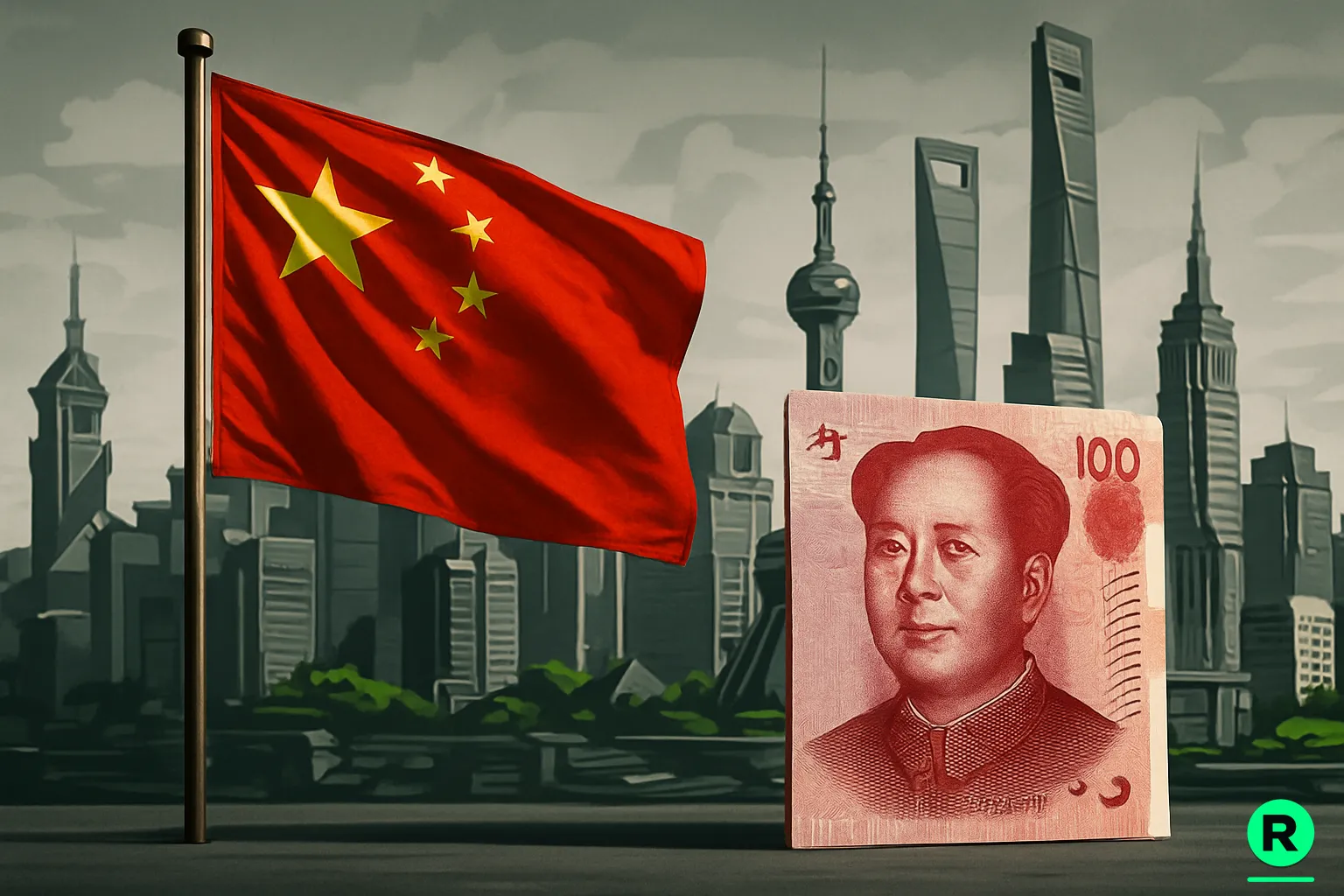
Copper fell 8% this month, dropping 1% on June 17 alone after Warsh's hawkish press conference, while China posted its first post-pandemic consumer-spending contraction in May 2026. Covers real-yield pressure, DX-Y.NYB, EEM sensitivity, and Oyu Tolgoi supply context.
RKey facts
- Copper fell 8% this month; dropped 1% specifically after Warsh's hawkish press conference on June 17
- China consumer spending contracted year-over-year in May 2026 for first time post-pandemic
- Real yields rising on Fed rate-hike expectations, reducing commodity financial demand
- Rio Tinto Oyu Tolgoi copper mine exports resumed post-protest, but underlying China demand weak
What's happening
Copper prices have come under sustained pressure in June 2026, caught between a demand shock from China and a macro shock from the Federal Reserve's hawkish pivot. The industrial metal has fallen 8% this month, reflecting anxiety about China's growth trajectory and rising real yields from higher expected US interest rates. On June 17 alone, Warsh's hawkish press conference triggered a 1% drop in copper, exemplifying how tightly correlated the metal has become to macro sentiment and Fed messaging.
The demand story centers on China. May 2026 saw the first year-over-year contraction in consumer spending since the end of the COVID-19 pandemic, a startling reversal after years of post-reopening recovery. Retail salesMonthly US retail-spending report. ~30% of GDP. Released ~2 weeks after the corresponding month at 8:30am ET. growth slowed, property investment remained depressed, and employment narratives softened. China's industrial capacity utilization, while still respectable, is trending lower as capex intentions weaken outside of AI infrastructure. With copper so heavily weighted toward construction, electrical wiring, and industrial machinery, a slowdown in Chinese demand is material. Rio Tinto has reported protests at its Mongolian Oyu Tolgoi copper mine have moderated and exports have resumed, but underlying demand fundamentals remain questioned.
On the macro side, Warsh's signaling of a hawkish Fed has pushed real yields higher, dampening speculative positioning in commodities. Higher US rates typically weigh on commodity prices by raising the opportunity cost of holding non-yielding assets and by strengthening the dollar, which makes commodities more expensive for non-US buyers. The two shocks compounded: weaker China demand reduced physical demand for copper, and hawkish Fed expectations reduced financial-positioning bullishness.
The copper weakness has implications for EM equities and currencies. Emerging-market indices like EEM and the Hang Seng are sensitive to commodity demand signals and China growth expectations. If copper continues to weaken, it will signal persistent China demand risks and could trigger further capital flight from EM assets into the US dollar. However, if the Hormuz ceasefire leads to an oil-price collapse that forces an OPEC adjustment and eventually a Fed rate-cut cycle in late 2026, copper could recover. The metal is a litmus test for global macro and China demand; traders will watch for stabilization signals from Chinese officials and any Fed dovish repricing.
Related coverage
More about $HG
- HG Copper -8% on China May Contraction: EEM stress read·Equities APAC
- HSCE 52-week low: China spending contracts, EEM -300 bps tracked·Equities APAC
- Hang Seng down 15% YTD: China credit beats but copper at -9%, decoded·Equities APAC
- China Credit Rebounds Above Forecasts Yet HSCE Sits 15% Below Year-Ago Levels·Equities APAC
- Portland General Lifts Data Center Rates 30 Percent but XLU Still Trails SPY by 500 Basis Points·Energy
Tracking PBOC easing, China property sector recovery, US-China trade relations and the Asia equity flows that follow each policy shift.
- BloombergThe Dollar Is Riding High Thanks to a Newly Hawkish Fed
Greenback’s strength is weighing on emerging-market currencies
21m ago - ActionForexEUR/USD Loses Ground as Market Sentiment Favours the US Dollar
EUR/USD fell on Friday to its lowest level since 31 March 2026 and is holding near 1.1457. The US dollar is being supported by rapidly growing expectations of further Federal Reserve policy tightening following more hawkish-than-expected signals from the regulator. This week, the Fed left interest rates unchanged. However, the updated forecasts showed that half […] The post EUR/USD Loses Ground as Market Sentiment Favours the US Dollar appeared first on ActionForex.
2h ago - ActionForexUS Stock Futures Retreated Ahead of Juneteenth Holiday, US Dollar Remains Firm
Key takeaways The reopening of the Strait of Hormuz has accelerated the unwinding of the geopolitical risk premium. Crude oil has fallen sharply, with WTI posting a 10% weekly decline as Gulf oil exports resume and supply concerns ease, supporting global risk sentiment and reducing near-term inflation pressures. The US dollar remains the dominant beneficiary […] The post US Stock Futures Retreated Ahead of Juneteenth Holiday, US Dollar Remains Firm appeared first on ActionForex.
4h ago - ForexLiveinvestingLive Asia-Pacific FX news wrap: Vance cancels trip for Iran talks
Japan CPI stays muted in May as subsidies mask building inflation pressure Oil and US dollar rising on news that Vance cancelled his trip to negotiate with Iran BoJ deputy governor says delaying on price risks could cause long-term economic damage Vance cancels his trip to Switzerland Japan finmin says prepared to take decisive action on speculative FX moves BoJ's Deputy governor warns yen moves now carry bigger inflation punch than in the past China says Australian beef imports hit 100% of quota on June 18th BoJ April minutes: Three members wanted to move in April; the rest caught up by June Japan May inflation data: Headline 1.5% y/y (expected 1.5%) Core 1.4% (expected 1.4%) UK consumer confidence masks growing cracks beneath steady headline New Zealand May 2026 trade data, exports and imports both up from April USD/JPY mystery sell-off from 161.80 leaves traders hunting for answers Citi sees oil at $60-65 by Q1 2027 as Hormuz flows normalise Iraq flags gradual oil return as Hormuz reopens, but risks linger Reminder - Hong Kong and China markets are closed for a holiday today, 19 June 2026 After 15 years of word-watching, markets may benefit from a Fed that talks less investingLive Americas FX news wrap 18 Jun USDJPY surges to near highs going to 2024 Summary: Iran has frozen its MOU commitments and postponed the Geneva talks with the US until a Lebanon ceasefire is in place, with Israel's continued attacks triggering the deal's first clause; Vance's Switzerland cancellation followed Oil and the USD edged higher on the news; gold slipped back under $4,200 Japan's core CPI held at 1.4% in May, core-core slowed to 1.8%, its weakest since September 2022, with fuel subsidies masking building pipeline pressure Finance Minister Katayama warned of decisive action against speculative yen moves, pulling USD/JPY back toward 161.00; traders are on guard for actual intervention given thin Juneteenth liquidity ahead The Nikkei slipped modestly on Friday but closed out a str
7h ago - ActionForexUSD/JPY Builds Strong Momentum for Another Upside Push
Key Highlights USD/JPY started a fresh increase above the 160.00 resistance. A key bullish trend line is forming with support at 160.40 on the 4-hour chart. EUR/USD extended losses and traded below 1.1520. WTI Crude Oil prices declined below $76.50 and $75.00. USD/JPY Technical Analysis The US Dollar remained supported above 158.50 against the Japanese […] The post USD/JPY Builds Strong Momentum for Another Upside Push appeared first on ActionForex.
7h ago - ForexLiveOil and US dollar rising on news that Vance cancelled his trip to negotiate with Iran
US Vice President JD Vance has canceled his planned trip to Switzerland for talks with Iran, citing unresolved logistics and uncertainty surrounding the next round of negotiations. First reported by CNN then confirmed by the Whiote House. This stumble so early in the peace process has sent a shudder through markets, continued at this stage, with the USD and oil on the rise. This article was written by Eamonn Sheridan at investinglive.com.
8h ago - MarketWatchDollar touches highest level in more than a year. Why this latest rally might be overdone.
The U.S. dollar headed Thursday for its highest close in more than a year, as investors continued to digest the Federal Reserve’s Wednesday meeting, which revived the possibility of further interest-rate increases.
13h ago - ForexLiveinvestingLive Americas FX news wrap 18 Jun USDJPY surges to near highs going to 2024
Russell 2000 rises by 2.12% and NASDAQ by 1.91% to lead stocks higher Trump: US is committed to PEACE Iran supreme leader responds to US MOU with caution Bitcoin price action is spelling T-R-O-U-B-L-E for the buyers US list blockade of maritime traffic entering and exiting the Straits of Hormuz Key Points from the MOU between the US and Iran. Major European indices close mixed with a bigger tilt to the upside VP Vance: We will manage flare-ups through diplomacy. Trump: Iran not a threat. Oil lower. Stocks higher. Prices dropping. Bloomberg reports that Kuwait is boosting oil output. Crude oil tests key 200 day MA US June Philly Fed business index 10.3 versus 10.0 estimate US initial jobless claims 226K vs 225K estimate. Continuing Claims 1.810M vs 1.795M est Canada May PPI +1.2% m/m vs +1.8% expected ECBs Lane: Hikes aim to contain spread of energy shock investingLive European FX news wrap: SNB and BoE steady; US dollar extends gains The USD continued its run to the upside after the more hawkish Fed yesterday. The gains in the greenback were led by gains versus the GBP (+0.68%), the CHF (+0.56%) and the JPY (+0.47%). The BOE and the SNB both kept rates unchanged. For the Bank of England, although the skew is toward higher rates, the central bank seems to be on hold for the foreseeable future as risks of slower growth balances things out a bit versus inflation. For the SNB, they indicated that intervention is not out of the question against the strong CHF. The USDJPY started to step higher after breaking above the 2026 high at 160.717 and squeezed higher as the price continued away from the 160.00 level and move to and through 161.00 instead. Anxiety about intervention reared its ugly head once the price extended up to 161.81 just about 11 or 12 pips short of the highest level going back to 2024. The price quickly move down to a low of 160.887 but then bounced back higher and is trading near 161.40 heading into the end of day. Traders can expect more anxiety g
13h ago