Iran War Locks Strait of Hormuz; Oil Above $75, Pushing Treasuries to Multi-Year Yields
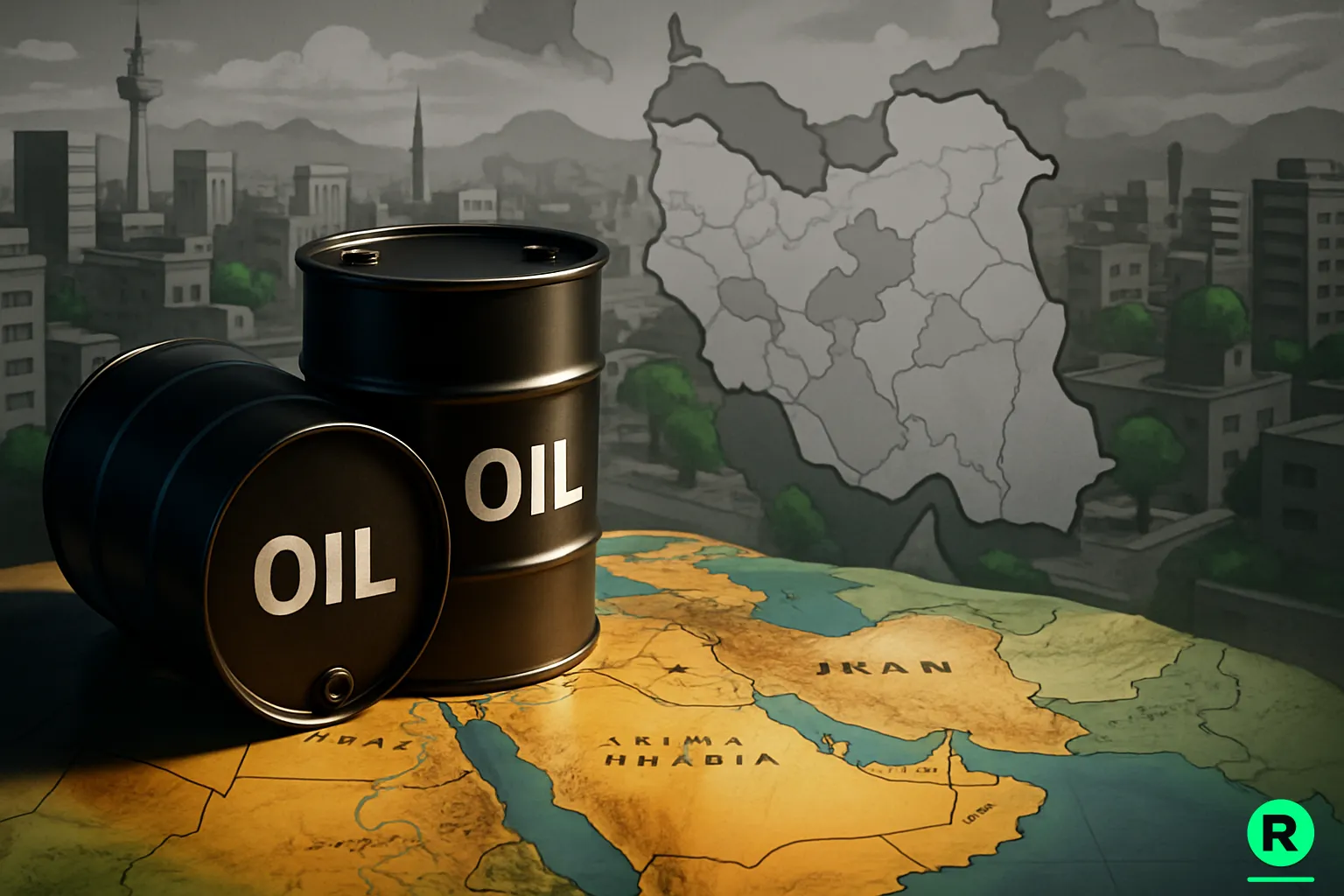
The Iran conflict continues to disrupt 20% of global oil flows through the Strait of Hormuz with no resolution in sight. Oil prices firm above $75 and heading for weekly gains, fueling inflation expectations that are pushing US Treasuries, Japanese yields, and other global debt higher, pressuring bond bulls and widening credit spreads.
RKey facts
- Strait of Hormuz effectively closed; 20% of global oil flows disrupted
- Crude oil tracking weekly gains, holding above $75 per barrel
- Japan producer prices surged by most since 2014; ECB may be forced to hike on oil inflationThe rate at which prices rise across an economy.
- US Treasuries and JGBs declining as investors flee bond markets on inflationThe rate at which prices rise across an economy. fears
What's happening
The war in Iran and its spillover into the Strait of Hormuz remains the dominant macro tail-risk driving commodity prices and global rates higher. With the critical chokepoint effectively closed, roughly 20% of the world's seaborne crude oil flows have been disrupted, forcing prices higher and keeping global inflationThe rate at which prices rise across an economy. expectations elevated. Oil is tracking for weekly gains and remains above $75 per barrel, a level that has sparked fresh inflation concerns across Treasury, JGB, and eurozone bond markets.
The inflationThe rate at which prices rise across an economy. signal is clear in the data. Japan's corporate goods prices surged by the most in 12 years in April, and US inflation has re-accelerated on energy components. This is forcing central banks into a bind: the European Central Bank's Yannis Stournaras warned that persistently high oil could force a rate hike, even as growth slows. Japan's 10-year yields are at multi-year highs as investors flee global bond markets and reassess rate-cut expectations. Treasuries are sliding on the same fears, with the bond market now pricing in a longer period of higher rates rather than near-term Fed easing.
For equities, the impact is twofold. Defensive sectors like utilities and consumer staples are pressured by higher rates and the expectation of slower growth. Energy stocks, however, are benefiting from the price floor, and defensive positioning is lifting. Emerging markets are the hardest hit, as higher US rates widen the carryIncome earned from holding a position over time.-trade unwind and pull capital back into dollar assets. The dollar itself is firm, benefiting from the rate differential with other currencies and safe-haven bid amid geopolitical risk.
The critical wildcard: how long before oil supply disruptions force OPEC+ or non-OPEC producers to materially increase output, or when diplomatic efforts resolve the Iran situation. Some traders argue the market is pricing in only a 3-6 month disruption window, which means any extension of the conflict could see oil spike toward $90-100. Alternatively, a sudden peace deal or emergency SPR release could trigger a sharp reversal, punishing those crowded into the energy complex.
Live coverage of the Iran conflict, Persian Gulf oil supply disruption, OPEC reaction and the cross-asset trades pricing it.
- ForexLiveOil prices continue to ramp up to start the new week
US and Iran continue to trade strikes in the Middle East and that is continuing to cast a dark cloud on markets to start the new week. Iran is making their presence known in attacking ships in the Strait of Hormuz and that has now led to the US imposing their own blockade again. Meanwhile, both sides are still exchanging missile strikes in the region as tensions continue to flare up since the ceasefire deal broke down. As such, daily ship traffic along the Strait of Hormuz has now fallen back to single digits. There's practically zero LNG tankers making their way across and the handful of tankers making their way through are all high-risk transits only. In essence, it means only Iranian or Chinese-linked vessels are passing through using the northern corridor. The great "reopening" didn't even get started really. This is all keeping oil prices underpinned, even opening with a gap higher this week. WTI crude is up a little over 2% to $83.55 now with Brent crude also the same at $90.33. As oil prices move up, it will keep broader markets on edge especially if bond yields continue to shoot higher as well. For now, a holiday in Japan is keeping things a bit quieter as we await European traders to enter the fray. In that lieu, just be mindful about USD/JPY as well just in case. Equities are a bit calmer with S&P 500 futures up 0.2% and Nasdaq futures up 0.5%. However, it represents a minor bounce after the heavy selling to end the week on Friday - which could've been much worse. The rest of the market mood is also a bit more mixed with the dollar not doing all too much. EUR/USD and USD/JPY are both flat at 1.1443 and 162.33 respectively while AUD/USD is seen stretching its legs a little with the currency pair up 0.2% to near 0.7000. That's about it though in terms of notable movement among major currencies. Meanwhile, gold is up 0.1% to $4,019 and silver is seen up 1.7% to $56.85 to start the new week. Thankfully, football won yesterday at least. After 104 games, Spain w
2h ago - ActionForexBrent Oil Above $90: Is $100 Next if Hormuz Blockade Persists?
Brent crude began the week with a gap higher, breaking above the key $90 psychological level as markets reacted to another round of deteriorating developments in the US-Iran conflict. Reports of US fatalities, a strike on a Kuwaiti energy facility, Iran’s declaration that the ceasefire was no longer valid, and renewed claims that the Strait […] The post Brent Oil Above $90: Is $100 Next if Hormuz Blockade Persists? appeared first on ActionForex.
2h ago - ActionForexEUR/USD Struggles Below 1.1500—Can Buyers Break Through?
Key Highlights EUR/USD is facing key hurdles near 1.1500. A rising channel is forming with support at 1.1400 on the 4-hour chart. GBP/USD jumped to 1.3560 before there was a pullback. WTI Crude Oil prices climbed further and traded above $84.00. EUR/USD Technical Analysis The Euro remained supported above 1.1365 against the US Dollar. EUR/USD […] The post EUR/USD Struggles Below 1.1500—Can Buyers Break Through? appeared first on ActionForex.
3h ago - ActionForexWti Crude Oil Surges on U.s.–Iran Tensions as Stocks Fall
Renewed tensions between the U.S. and Iran pushed WTI crude oil sharply higher as traders worried about possible disruptions in the Strait of Hormuz. Higher oil prices also weakened the Japanese yen, helping USD/JPY move higher. U.S. and Japanese stocks fell as investors became more concerned about high valuations in AI companies. The release of […] The post Wti Crude Oil Surges on U.s.–Iran Tensions as Stocks Fall appeared first on ActionForex.
4h ago - BloombergLatest Oil Market News and Analysis for July 20
Brent crude jumped after the US and Iran escalated hostilities over the weekend, including the targeting of vessels attempting to transit the Strait of Hormuz and an attack on a key oil facility in Kuwait.
9h ago - Yahoo FinanceActive Funds Can’t Beat the S&P 500? This One Didn’t Get the Memo14h ago
- Yahoo FinanceEnergy Transfer Looks Poised to Outperform the S&P 500 in the Back Half of 202616h ago
- BloombergExtreme Stock Swings Tempt Funds Into Reverse Dispersion Trade
Betting that individual stocks will be volatile while the S&P 500 stays relatively calm has been a popular and successful hedge fund strategy. But with the swings in share prices reaching extreme levels, the reverse trade is gaining traction with investors.
17h ago