Iran War Closes Hormuz Strait; Oil Stays Above $75, Lifting Energy Inflation Fears
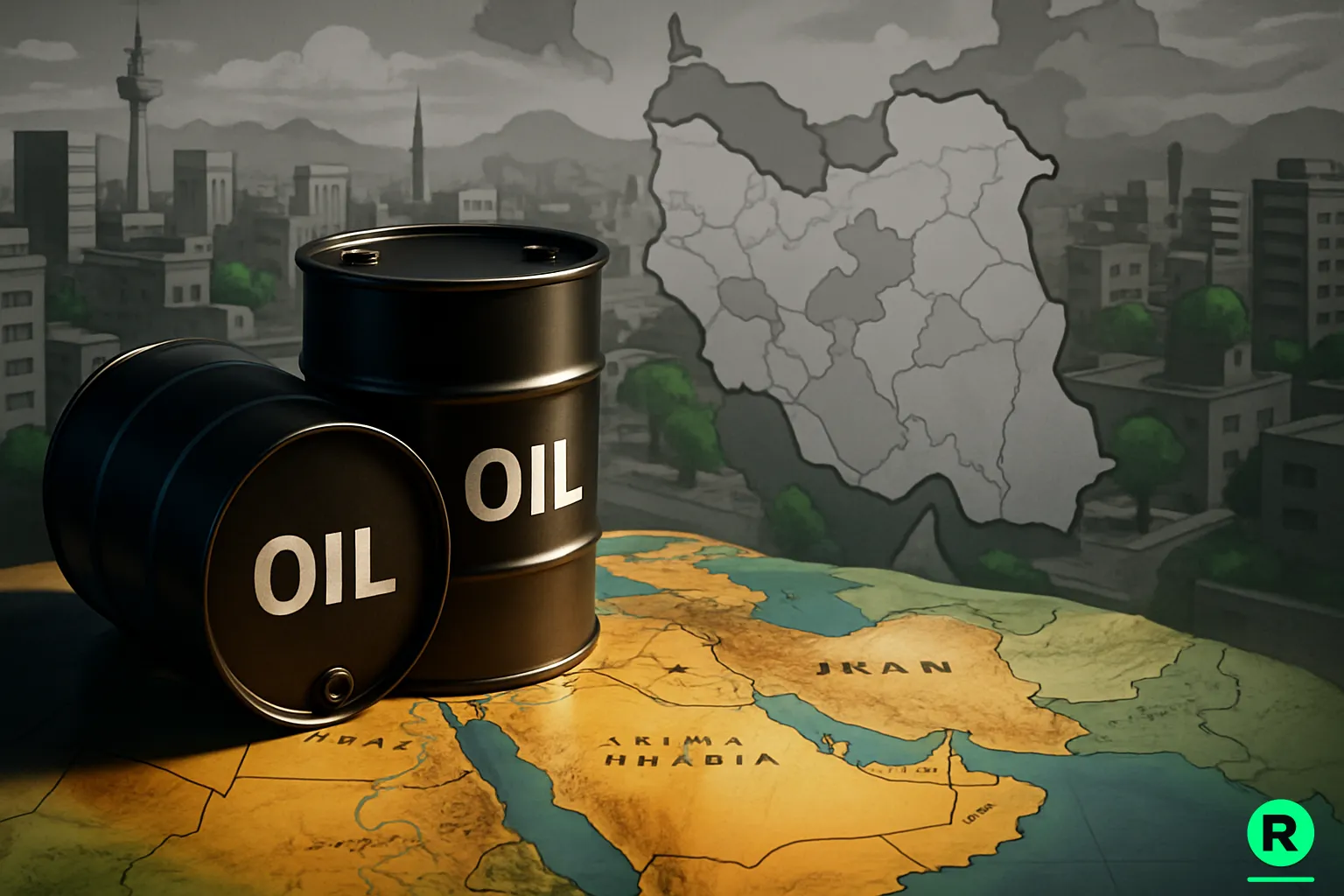
The Iran-Israel conflict has disrupted Strait of Hormuz shipping for over two months, tightening global oil supply and pushing import/export prices to their highest since 2022. Energy costs are driving broader inflation expectations and forcing central banks to reconsider rate-cut timelines.
RKey facts
- Strait of Hormuz closed to most commercial shipping for over 60 days due to Iran-Israel conflict
- US import/export prices surged in April, highest since 2022, driven by oil costs
- Global oil supply tightened despite alternative shipping routes; crude holding above $75/barrel
- Minneapolis Fed, ECB officials signal inflationThe rate at which prices rise across an economy. concerns may delay or reverse rate-cut expectations
What's happening
The Middle East war, which escalated in late March 2026 and has persisted for over two months, continues to disrupt one of the world's most critical chokepoints for energy: the Strait of Hormuz. Nearly 30% of seaborne oil transits this narrow corridor, and Iran's military operations have forced many commercial vessels to reroute or halt passage entirely. While some supertankers are beginning to transit again and alternative routes (via the Cape of Good Hope) are seeing increased traffic, the backlog and route lengthening have materially tightened global oil supply.
US crude prices have stabilized above $75 per barrel, and the ripple effects are visible across the economy. US import and export prices surged in April by the largest margin since 2022, driven overwhelmingly by oil costs. Shipping delays, insurance premiums on tankers transiting conflict zones, and refinery margin compression are all working through supply chains. DeltaHow much an option's price changes per $1 move in the underlying. Air Lines CEO Ed Bastian highlighted the impact: rising jet fuel costs are accelerating a divide between budget and full-service carriers, with lower-cost operators (particularly post-Spirit Airlines' collapse) struggling to compete on profitability.
Central banks are caught in a bind. Minneapolis Fed President Kashkari reiterated that inflationThe rate at which prices rise across an economy. is too high, signaling that the Fed may need to pause or delay rate cuts if oil prices remain elevated. Meanwhile, ECB Governing Council member Stournaras warned that high oil prices could force a eurozone rate hike, contradicting the consensus dovish pivot. Oil exporters (Norway, Canada, Brazil, Russia) are benefiting from higher prices and reallocating capex into deepwater and onshore projects. Conversely, energy importers (EU, Japan, India) are facing margin compression and potential growth headwinds. Treasury yields are rising on inflation fears, pressuring durationBond price sensitivity to interest rate changes.-sensitive equities and growth stocks.
The wild card is geopolitical resolution. If the Iran war ends in the near term, oil could plunge 15-20% on supply normalization fears. If it persists, $90-100 oil becomes a material tail risk, forcing broader macro reassessment.
Live coverage of the Iran conflict, Persian Gulf oil supply disruption, OPEC reaction and the cross-asset trades pricing it.
- ActionForexMarkets Shrug Off Weekend Escalation as Diplomacy Hopes Keep Risk Appetite Intact
Financial markets showed surprising resilience on Monday despite another escalation in the US-Iran conflict over the weekend. Brent crude briefly surged above $90 after opening with a gap higher but failed to sustain the advance, retreating back below that level during the European session. The inability of oil to extend its gains helped stabilize broader […] The post Markets Shrug Off Weekend Escalation as Diplomacy Hopes Keep Risk Appetite Intact appeared first on ActionForex.
5h ago - ForexLiveinvestingLive European markets wrap: Oil retreats, equities bounce as Iran touches on mediation proposals
Headlines: Oil prices ease a bit after Iran's Foreign Ministry Spokesperson suggests diplomatic efforts are continuing despite the attacks Iran says that diplomatic efforts have been "active" in recent days, received proposals from several mediators Gold stays under pressure as the US-Iran crisis keeps inflation and rate hike risks elevated ECB's Q2 SAFE survey shows inflation and wage growth expectations easing, but upside risks remain German producer prices nudge lower in June due to drop in energy prices Market moving news for Asian trading: Oil jumps as US-Iran war spread, Hormuz tankers struck Market update: WTI crude down 2% to $80.05 European equities slightly higher; S&P 500 futures up 0.5% AUD leads, EUR and CAD lag on the day US 10-year yields up 0.5 bps to 4.547% Gold up 0.3% to $4,030 Bitcoin up 0.4% to $64,791 There wasn't too much on the session as markets continue to sing to the tune of the US-Iran conflict. Tensions remain high over the weekend and that saw oil prices open with a gap higher to start the new week. However, Iran's foreign ministry spokesperson confirmed that mediation proposals are being put forward and that sparked some hope that negotiations could resume soon enough again. And that saw oil prices drop back slightly with WTI crude erasing early gains to fall 2% intraday to $80.05. At the same time, equities recovered some poise after a bit of a shaky start to European morning trade. Major indices in Europe opened with slight losses before recovering back to sit a little higher on the day. Meanwhile, US futures pushed up to hold a minor bounce ahead of the open later. S&P 500 futures are up 0.5% with Nasdaq futures up 1.0% but that comes after the heavy selling from Friday last week. So, there is still some nerves up in the air. In the major currencies space, the dollar is mostly little changed with AUD/USD the only notable mover - up 0.4% to 0.7010. Besides that, EUR/USD is flat at 1.1435 and USD/JPY flattish at 162.30 levels on
7h ago - ActionForexSilver Bears Miss Their Chance as Oil Rally Fails to Extend Selling
Silver briefly slipped below the key $55 level on Friday but quickly regained its footing as the new week began, despite Brent crude gapping above $90 following another escalation in the US-Iran conflict. The lack of additional selling is notable. Throughout last week, higher oil prices fueled expectations of renewed inflation pressure, lifting Treasury yields […] The post Silver Bears Miss Their Chance as Oil Rally Fails to Extend Selling appeared first on ActionForex.
9h ago - Yahoo FinanceBrent crude pulls back after topping $90 as markets assess US-Iran conflict9h ago
- ForexLiveOil prices continue to ramp up to start the new week
US and Iran continue to trade strikes in the Middle East and that is continuing to cast a dark cloud on markets to start the new week. Iran is making their presence known in attacking ships in the Strait of Hormuz and that has now led to the US imposing their own blockade again. Meanwhile, both sides are still exchanging missile strikes in the region as tensions continue to flare up since the ceasefire deal broke down. As such, daily ship traffic along the Strait of Hormuz has now fallen back to single digits. There's practically zero LNG tankers making their way across and the handful of tankers making their way through are all high-risk transits only. In essence, it means only Iranian or Chinese-linked vessels are passing through using the northern corridor. The great "reopening" didn't even get started really. This is all keeping oil prices underpinned, even opening with a gap higher this week. WTI crude is up a little over 2% to $83.55 now with Brent crude also the same at $90.33. As oil prices move up, it will keep broader markets on edge especially if bond yields continue to shoot higher as well. For now, a holiday in Japan is keeping things a bit quieter as we await European traders to enter the fray. In that lieu, just be mindful about USD/JPY as well just in case. Equities are a bit calmer with S&P 500 futures up 0.2% and Nasdaq futures up 0.5%. However, it represents a minor bounce after the heavy selling to end the week on Friday - which could've been much worse. The rest of the market mood is also a bit more mixed with the dollar not doing all too much. EUR/USD and USD/JPY are both flat at 1.1443 and 162.33 respectively while AUD/USD is seen stretching its legs a little with the currency pair up 0.2% to near 0.7000. That's about it though in terms of notable movement among major currencies. Meanwhile, gold is up 0.1% to $4,019 and silver is seen up 1.7% to $56.85 to start the new week. Thankfully, football won yesterday at least. After 104 games, Spain w
13h ago - ActionForexBrent Oil Above $90: Is $100 Next if Hormuz Blockade Persists?
Brent crude began the week with a gap higher, breaking above the key $90 psychological level as markets reacted to another round of deteriorating developments in the US-Iran conflict. Reports of US fatalities, a strike on a Kuwaiti energy facility, Iran’s declaration that the ceasefire was no longer valid, and renewed claims that the Strait […] The post Brent Oil Above $90: Is $100 Next if Hormuz Blockade Persists? appeared first on ActionForex.
14h ago - ActionForexEUR/USD Struggles Below 1.1500—Can Buyers Break Through?
Key Highlights EUR/USD is facing key hurdles near 1.1500. A rising channel is forming with support at 1.1400 on the 4-hour chart. GBP/USD jumped to 1.3560 before there was a pullback. WTI Crude Oil prices climbed further and traded above $84.00. EUR/USD Technical Analysis The Euro remained supported above 1.1365 against the US Dollar. EUR/USD […] The post EUR/USD Struggles Below 1.1500—Can Buyers Break Through? appeared first on ActionForex.
15h ago - ActionForexWti Crude Oil Surges on U.s.–Iran Tensions as Stocks Fall
Renewed tensions between the U.S. and Iran pushed WTI crude oil sharply higher as traders worried about possible disruptions in the Strait of Hormuz. Higher oil prices also weakened the Japanese yen, helping USD/JPY move higher. U.S. and Japanese stocks fell as investors became more concerned about high valuations in AI companies. The release of […] The post Wti Crude Oil Surges on U.s.–Iran Tensions as Stocks Fall appeared first on ActionForex.
16h ago