Iran War Drives Oil Above $75, Squeezing Airlines, Refiners, and Pushing Inflation Higher
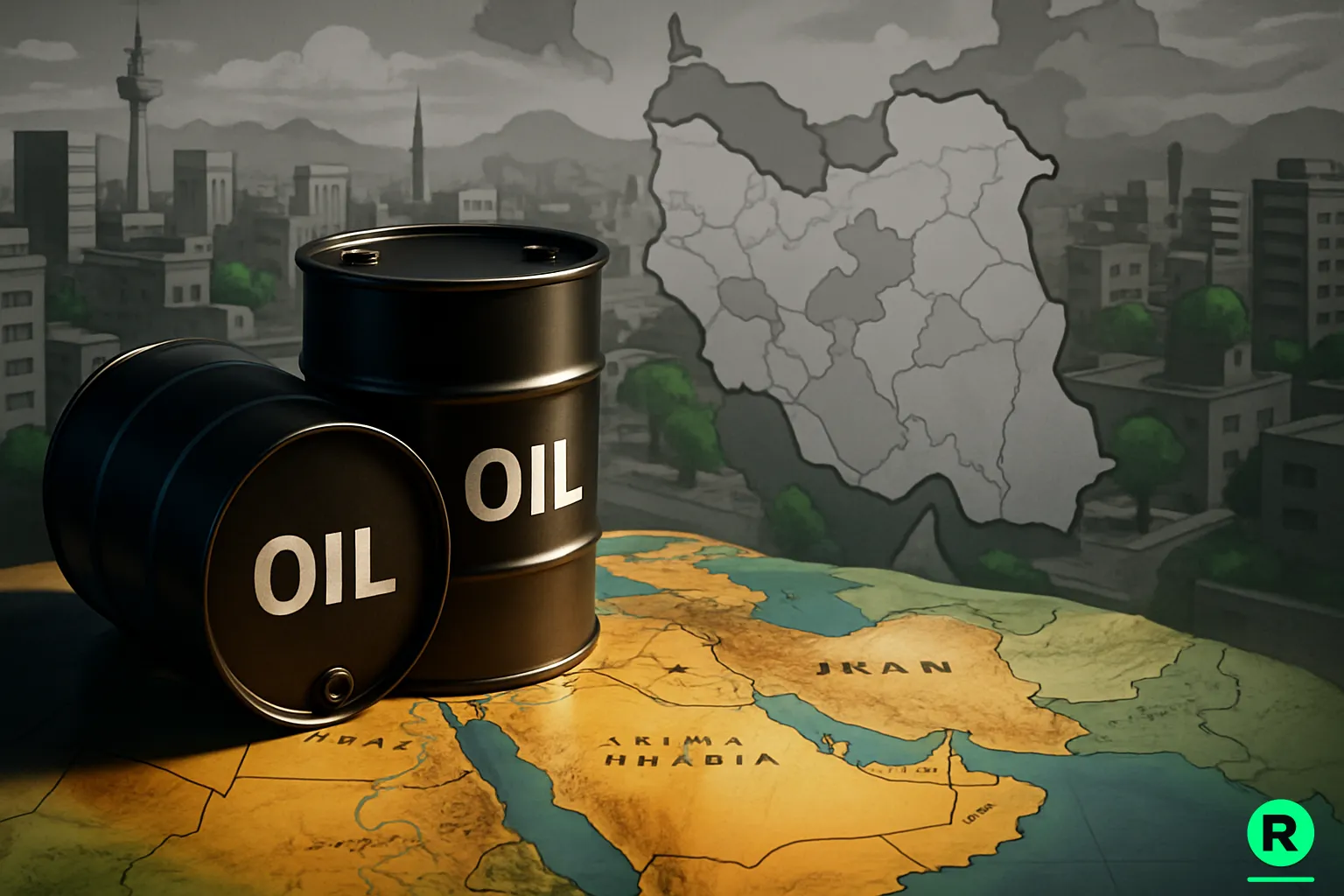
The escalating US-Israeli conflict with Iran has triggered a near-30% drop in Strait of Hormuz oil flows, pushing crude prices above $75 and forcing major airlines to cut capacity, raise fares, and slash full-year earnings guidance, while energy importers globally face margin compression and emerging markets lose foreign reserves to currency defense.
RKey facts
- Strait of Hormuz oil flows declined nearly 30% in Q1 2026 due to Iran conflict
- Oil prices sustained above $75/barrel; Brent crude approached $95
- Air New Zealand issued full-year loss guidanceCompany-issued forecasts of future financial performance. citing jet-fuel cost surges and capacity cuts
- India requested Russian oil sanctions waiver extension; Turkey raised inflationThe rate at which prices rise across an economy. target to 24%
What's happening
The intensifying conflict in the Persian Gulf has fundamentally reshapen energy markets and corporate guidanceCompany-issued forecasts of future financial performance. across transportation, energy, and emerging markets. The Strait of Hormuz, which carries roughly one-third of global seaborne crude oil and two-thirds of liquefied natural gas, experienced flows down nearly 30% in the first quarter of 2026, according to the US Energy Information Administration. Oil prices have been sustained above $75/barrel, and Brent crude has approached $95, triggering a cascade of margin pressure across industries dependent on fuel costs. Airlines, in particular, have borne the brunt: Air New Zealand issued a full-year loss forecast due to surging jet-fuel costs and was forced to cut flights and services. Sapporo Holdings suspended Pokka beverage exports to the Middle East due to demand uncertainty amid the conflict.
Central banks and foreign exchange reserves have absorbed significant shocks. India, a major crude importer, requested an extension of its Russian oil sanctions waiver to offset lost Middle Eastern barrels and has seen its FX reserves pressured by defensive purchases. Turkey's central bank revised its year-end inflationThe rate at which prices rise across an economy. target upward to 24%, explicitly citing energy costs from the Iran war. Poland's economic growth slowed in Q1 due to winter weather combined with elevated energy uncertainty. China's gasoline demand is expected to continue sliding as higher oil prices accelerate the shift to electric vehicles, a silver lining for EV makers but a headwind for legacy oil companies. The energy shock is also visible in commodity markets: copper has retreated from record highs as demand from Chinese heavy industry faces the dual headwind of pricier oil and weakening sentiment on the Trump-Xi summit negotiations.
Meanwhile, geopolitical tensions are driving flows elsewhere. Japan's Eneos agreed to purchase Chevron's refining and retail assets across Asia Pacific for $2.17 billion, signaling a regional pivot to secure energy supply chains away from Middle Eastern choke points. Rare earth minerals and energy security have become explicit agenda items in US-China talks, with Trump and Xi discussing both trade and energy cooperation. The inflationThe rate at which prices rise across an economy. risk is particularly acute for the European Central Bank: ECB Governing Council member Kazaks stated the bank would need to hike rates if oil prices feed through to inflation expectations, complicating ECB President Lagarde's recent dovish messaging.
Skeptics note that high oil prices historically throttle demand faster than expected, eventually stabilizing prices. Moreover, if the Trump administration and China coordinate on Middle East de-escalation (a possibility floated at the Beijing summit), oil could reverse sharply, invalidating the energy shock narrative. Airlines have also begun hedging aggressively and raising ticket prices to offset fuel costs, partially insulating earnings from further upside shocks. The question remains whether the conflict will persist or if diplomatic efforts yield quick relief.
Live coverage of the Iran conflict, Persian Gulf oil supply disruption, OPEC reaction and the cross-asset trades pricing it.
- ActionForexEUR/USD Daily Outlook
EUR/USD is still extending consolidation from 1.1323 and intraday bias remains neutral at this point. With 1.1499 support turned resistance intact, further decline is expected. On the downside, break of 1.1323 will resume the fall from 1.2081 to 100% projection of 1.2081 to 1.1408 from 1.1848 at 1.1175. However, decisive break of 1.1499 will turn […] The post EUR/USD Daily Outlook appeared first on ActionForex.
40m ago - HandelsblattRente: Bis zu 393.000 Euro extra möglich: Diese Zahlen zeigen, wie viel Kapitalrente Sie bekommen könnten
2028 soll die Kapitalrente starten. Das Handelsblatt hat für vier Altersgruppen mit verschiedenen Szenarien berechnet, wie viel Geld sich mit der Zusatzrente ansparen lässt.
44m ago - Yahoo FinanceHere’s the Smartest S&P 500 ETF to Buy Before July Ends1h ago
- BloombergEconomic Momentum Flips From Blessing to Curse for S&P 500 Bulls
Strong economic momentum is a double-edged sword for US equity traders. Solid growth is an earnings tailwind. But let it run too hot, and it turns from blessing to curse.
1h ago - Yahoo FinanceCopper Prices Supported by Tighter Supply in China1h ago
- Yahoo FinanceHistory Says Investors Should Listen to Warren Buffett: The S&P 500 Is on the Verge of Doing Something for the First Time in 155 Years as Investors Buy "Nothing But Hope."1h ago
- ForexLiveMarket outlook today: Gold and Bitcoin lead as key breakout levels come into focus
Market outlook: Gold, crypto and US indices test important breakout levels At the time of this market review, precious metals and major cryptocurrencies were producing some of the clearest bullish signals. US stock indices were also recovering, although several important resistance levels still stood between a rebound and a more convincing bullish continuation. Can the US stock index recovery continue? S&P 500 futures recovered from support and turned higher. A sustained move above the previous high near 7,550 could open a path toward 7,600. Another rejection from 7,550, however, would leave the recovery vulnerable. The Dow Jones also recovered after briefly trading below support. For the Dow Jones cash index, 52,150 is the main bullish confirmation level. Acceptance above it would suggest that buyers are regaining control. Educational insight: A market touching resistance is not the same as breaking it. Acceptance generally means price remains above the level for a meaningful period and successfully defends it during a pullback. Are gold and silver still bullish? Gold has broken above an important resistance structure extending from its April high. The 4,040-4,045 area could now act as support if price returns to test it. Holding above that zone would preserve the bullish structure. Sustained trade back below it would warn that the breakout may have failed, particularly if buyers cannot quickly reclaim the area. Silver also defended major longer-term support before turning higher. Two additional metals are approaching important confirmation levels: Platinum: A sustained move above approximately $1,710 would strengthen the case for a larger advance. Palladium: Buyers need to clear approximately $1,375 before the broader outlook becomes more convincingly bullish. A useful concept here is the support-resistance flip. When price breaks above resistance, traders often watch whether the same area becomes support during the next pullback. If it does, the breakout gai
2h ago - ActionForexCrude Oil: No Room for Error
The Saudi Arabian export stop is a worry for the oil market. Rising Brent prices are increasing the chances of Fed rate hikes, supporting the USD. The US dollar has reached weekly highs, driven by rising demand for safe-haven assets and higher yields on US Treasury bonds. Investors are demanding a higher risk premium amid […] The post Crude Oil: No Room for Error appeared first on ActionForex.
2h ago