Iran War Pushes Oil Prices Higher, Inflation Fears Across EM
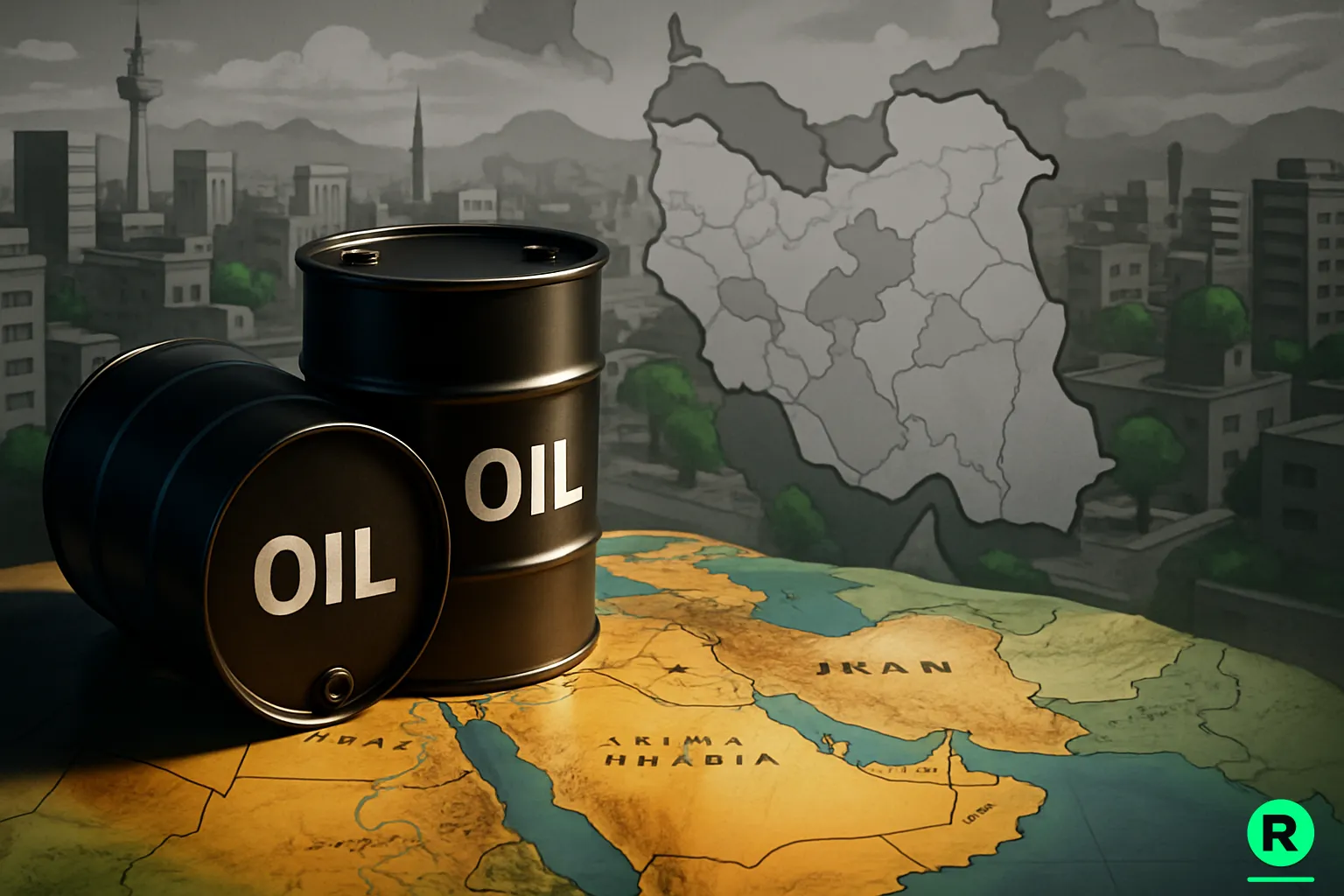
The ongoing Iran-Israel military conflict has disrupted crude supplies and pushed energy prices higher, forcing emerging-market central banks to revise inflation forecasts upward and reconsider rate-cut plans. Global supply chains face renewed pressure as commodity-importing nations grapple with margin compression and elevated geopolitical risk premiums.
RKey facts
- Iran's Kharg Island oil jetties empty; Saudi crude output at lowest since 1990
- Turkish and Czech central banks raised inflationThe rate at which prices rise across an economy. forecasts citing Iran war impact
- Fitch downgraded Bangladesh outlook to negative; Pakistan grapples with energy costs
- Agnico Eagle investing $10.2B in Ontario gold; Equinox Gold acquiring Orla Mining for $5.1B
What's happening
The US-Israeli military campaign against Iran has created a persistent supply shock in crude oil markets, with satellite imagery confirming that Iran's Kharg Island oil jetties are regularly empty, curbing exports from one of the world's largest producers. Saudi Arabia, too, reported to OPEC that its crude production collapsed to the lowest level since 1990, a stunning decline driven by the conflict's spillover effects and the broader instability in the Persian Gulf. These supply dynamics have supported oil prices at elevated levels despite weak demand signals from some regions, creating a stagflationary backdrop that is rippling through global macro.
Central banks in trade-dependent, energy-importing nations are responding with caution and concern. Turkey's central bank has raised its inflationThe rate at which prices rise across an economy. forecasts explicitly citing the Iran war, forcing policymakers to reconsider the pace of rate cuts even as domestic growth softens. The Czech National Bank has similarly pivoted to a more cautious stance. Bangladesh's rating agency Fitch downgraded its outlook to negative, citing high vulnerability to Middle East disruptions. Pakistan's economy accelerated in recent quarters but faces renewed headwinds from soaring energy costs, with global crude prices elevated due to conflict-driven supply constraints. India is also contemplating scaling back Russian oil imports if US sanctions waivers expire, further tightening global crude balances.
For commodity exporters, the conflict has created a bifurcated market: producers of oil and metals benefit from higher prices, while importers face margin pressure and inflationThe rate at which prices rise across an economy.. North Sea oil, typically a global pricing benchmark, traded at a discount for the first time during the Iran war as immediate fears eased temporarily, but the long-term supply picture remains tight. Mining companies, sensing investment opportunity, are stepping up. Agnico Eagle announced a $10.2 billion investment in Ontario gold assets, and Equinox Gold agreed to acquire Orla Mining for $5.1 billion, both bets on long-term precious-metals demand amid macro uncertainty. Senegal is accelerating development of the Yakaar-Teranga gas field, a $7.5 billion project designed to reduce energy subsidies and boost energy security.
The geopolitical premium in energy markets is unlikely to disappear quickly. Trump's repeated military threats against Iran, even as he prepares for the Xi summit, suggest the conflict could escalate further. This creates a dilemma for growth-oriented equities: while earnings remain robust in many sectors, the persistent inflationThe rate at which prices rise across an economy. tail-risk and central-bank caution could cap equity multiples. Investors are increasingly demanding resilience premiums in Middle East and EM assets, with those perceived as geopolitically buffered trading at relative premiums. The durationBond price sensitivity to interest rate changes. of the conflict and degree of further escalation will be the key variables shaping global inflation and monetary policy for the remainder of 2026.
Live coverage of the Iran conflict, Persian Gulf oil supply disruption, OPEC reaction and the cross-asset trades pricing it.
- HandelsblattSteuererklärung 2025: 1230 Euro pauschal: Diese Werbungskosten senken die Steuerlast noch weiter
Ob Bücher oder Bahntickets – rund um den Job gibt es zahlreiche Möglichkeiten, Werbungskosten abzusetzen und so am Ende Steuern zu sparen. Ein Überblick.
4h ago - HandelsblattFinanzamt: Neue Kryptoregeln – Wer seine Steuernummer nicht angibt, riskiert 50.000 Euro Bußgeld
Ab 2026 müssen Kryptobörsen neue Transparenzvorschriften einhalten. Was das Finanzamt künftig über Kryptobesitzer weiß und wo noch anonyme Geschäfte möglich sind.
4h ago - HandelsblattSchienenverkehr: 26 Züge von Siemens bestellt: Wie Italo das Quasi-Monopol der Deutschen Bahn brechen will
Das italienische Privatunternehmen investiert 3,6 Milliarden Euro in Deutschland, um im Fernverkehr gegen die Deutsche Bahn anzutreten. Werden Zugtickets dadurch künftig billiger?
5h ago - HandelsblattSchienenverkehr: 26 Züge von Siemens bestellt: Wie Italo das Quasi-Monopol der Deutschen Bahn brechen will
Das italienische Privatunternehmen investiert 3,6 Milliarden Euro in Deutschland, um im Fernverkehr gegen die Deutsche Bahn anzutreten. Werden Zugtickets dadurch künftig billiger?
5h ago - ActionForexMarkets Shrug Off Weekend Escalation as Diplomacy Hopes Keep Risk Appetite Intact
Financial markets showed surprising resilience on Monday despite another escalation in the US-Iran conflict over the weekend. Brent crude briefly surged above $90 after opening with a gap higher but failed to sustain the advance, retreating back below that level during the European session. The inability of oil to extend its gains helped stabilize broader […] The post Markets Shrug Off Weekend Escalation as Diplomacy Hopes Keep Risk Appetite Intact appeared first on ActionForex.
5h ago - PR Newswire FinancialDoubleLine Paper: Honebuto Shock: Japan Courts a Truss-Like Redux
TAMPA, Fla., July 20, 2026 /PRNewswire/ -- Sell-offs in Japanese Government Bonds (JGBs) and the yen have put Japanese Prime Minister Sanae Takaichi on notice, a DoubleLine paper argues, that Japan's creditors have little tolerance for her government's unorthodox proposal for a mixture of...
5h ago - ActionForexForex: the Dollar’s Rivals Are Not Resting on Their Laurels
The euro is awaiting signals from the ECB regarding a rate rise. The pound will be looking for clues in the macroeconomic data. The US dollar is finding support amid geopolitical developments and the high likelihood of Fed tightening. Although the futures market has priced out the prospect of a federal funds rate hike in […] The post Forex: the Dollar’s Rivals Are Not Resting on Their Laurels appeared first on ActionForex.
6h ago - ActionForexEUR/USD Daily Outlook
Intraday bias in EUR/USD remains neutral as consolidation from 1.1323 continues. With 1.1499 support turned resistance intact, further decline is expected. On the downside, break of 1.1323 will resume the fall from 1.2081 to 100% projection of 1.2081 to 1.1408 from 1.1848 at 1.1175. However, decisive break of 1.1499 will turn bias back to the […] The post EUR/USD Daily Outlook appeared first on ActionForex.
6h ago